

I. Waterproof and Weather-Resistant
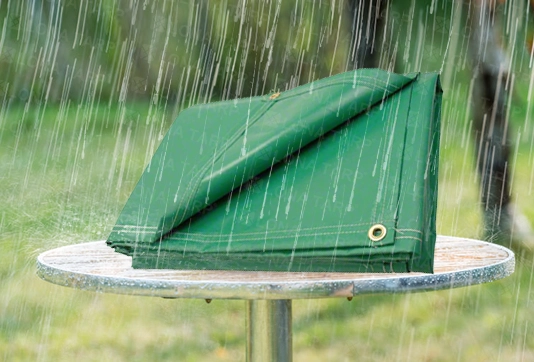 Water ranks among the most persistent and damaging threats to materials exposed to the outdoors. Waterproof canvas excel in these conditions due to their inherently waterproof nature. This protection stems from their polyvinyl chloride coating, which forms a continuous, impermeable barrier that effectively repels rain, snow, and ambient moisture. While traditional protective materials often degrade, develop leaks, or absorb water over time, Waterproof Canvas maintain their integrity and performance regardless of prolonged downpours or consistently high humidity.
This exceptional water resistance is further reinforced by their construction. Critical features such as heat-welded seams and reinforced edges eliminate weak points where water typically seeps through. By preventing any moisture penetration, these design elements ensure complete and reliable protection, preserving the value and condition of whatever lies beneath—from machinery and inventory to crops and event spaces.
III. Wind and Abrasion Resistance
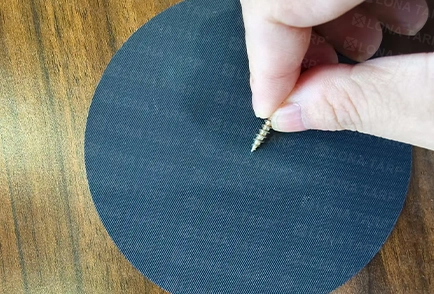 In windy conditions, ordinary covers can quickly become dangerous projectiles—yet PVC waterproof tarps are engineered to remain securely in place. Their exceptional tensile strength and high tear resistance enable them to endure powerful gusts without tearing or stretching beyond recovery. Adding to their resilience, many PVC waterproof tarpaulins incorporate embedded polyester mesh or scrim reinforcement, which significantly boosts their ability to resist abrasion from friction, airborne debris, and repeated mechanical stress.
To ensure maximum security in high-wind scenarios, these tarps are fitted with reinforced hems and corrosion-resistant grommets placed at regular intervals. These heavy-duty anchoring points allow for tight and reliable tying, making PVC laminated fabrics an ideal choice for construction sites, trucking, outdoor storage, and any application where staying securely fastened is critical to safety and performance.
V. Chemical and Mildew Resistance
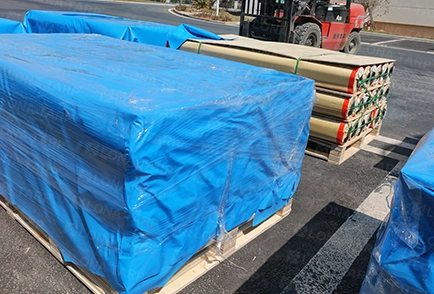 In demanding industrial and agricultural environments, tarps are frequently exposed to harsh chemicals, fertilizers, oils, and decaying organic matter. Vinyl coated polyesters stand up to these challenges thanks to their innate resistance to many acids, alkalis, and solvents. This chemical resilience allows them to maintain structural integrity and performance even after repeated contact with aggressive substances.
Moreover, Waterproof canvas are treated to actively inhibit the growth of mold, mildew, and fungi. This added protection is especially crucial in humid or wet settings—such as food processing facilities, composting areas, or greenhouse operations—where moisture and organic matter would quickly cause lesser materials to degrade. By resisting both chemical and biological threats, these tarps deliver durable and reliable performance in some of the most corrosive conditions.
