

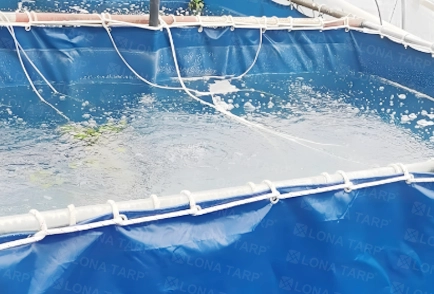
 This is not merely a technical question, but a core business issue concerning project success, brand reputation, and market share. As a critical link in the pond construction, aquaculture, or water feature engineering industry chain. Whether you are a processor directly involved in PVC liner pond manufacturing, a trading distributor with insight into pond liner PVC market demand, or an engineering service provider responsible for integrated solutions. You need a clear, powerful, and scientific answer to alleviate customers’ concerns, enhance their confidence in purchasing PVC pond liners, and thus get more orders. Today, we will delve into this topic and reveal the immense and sustainable commercial value behind an affirmative “safe” answer.
II. In-Depth Analysis of the Safety Genes of High-Quality Pond Liners PVC.
The Evolution of Materials Science: Modern PVC Formulations Are a Far Cry from Their Predecessors
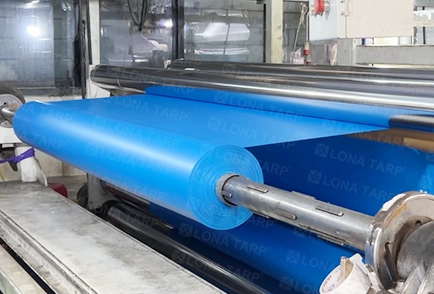 First, as a PVC pond liner manufacturer, we must clarify a common misconception: not all PVC is created equal. Just as food-grade PVC is fundamentally different from industrial-grade PVC, heavy-duty PVC pond liners designed for aquaculture also differ radically from ordinary, cheap PVC tarpaulins in both formulation and manufacturing processes. Their safety is built upon three core pillars: non-toxic resins, eco-friendly additives, and stable production technology.
The first critical line of defense lies in the use of high-purity, food-contact-grade PVC resin as the base material. This carefully selected raw material ensures initial cleanliness and biological safety from the source, completely eliminating the risk of harmful substance release. This is complemented by strictly screened environmentally friendly additives, which not significantly enhance the liner’s durability but also guarantee that no plasticizers or other pollutants will migrate into the water, even under long-term immersion. Combined with precise and stable manufacturing processes, these three elements together form a reliable safety barrier, giving your customers complete peace of mind.
The Core Battleground: The Key Role and Selection of Eco-Friendly Plasticizers
Public concern often focuses most on “plasticizers.” Traditional phthalate plasticizers (e.g., DEHP) indeed pose risks as environmental hormones, which is an industry consensus. But this is precisely where the value of polyester reinforced PVC pond liner lies! Leading PVC pond liner manufacturers have fully adopted non-phthalate eco-friendly plasticizers, such as DOTP (Di(2-ethylhexyl) terephthalate) and TOTM (Trioctyl trimellitate). These new-generation plasticizers feature large molecular weight, stable structure, and low tendency to migrate and leach. Their acute toxicity and environmental hormone effects are extremely low, and they have passed the world’s most stringent environmental regulations such as EU REACH and RoHS. Choosing a liner that uses such eco-friendly plasticizers means fundamentally cutting off the source of harmful substance leakage, constructing a safe physical barrier for aquatic life. When you explain this technical detail to customers, you are demonstrating not just a product, but your grasp of industry trends and professional attitude towards life responsibility.
Comprehensive Protective Shield: Synergistic Guarantee from Stabilizers, Antimicrobial Agents, and Reinforcing Materials
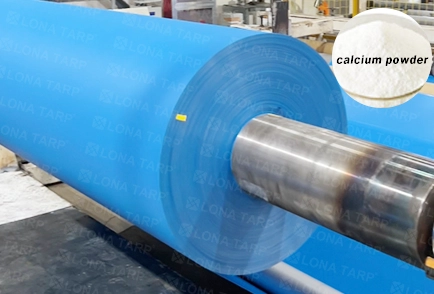 A safe underwater environment requires multiple protections. High-quality polyester reinforced PVC pond liners also incorporate calcium-zinc (Ca-Zn) stabilizers in their formulation—a non-toxic heat stabilizer used to replace heavy metal-based lead salt stabilizers. It ensures the material’s performance stability during production processing and throughout its service life, preventing premature degradation due to light exposure or thermal expansion and contraction. Furthermore, many superior products co-extrude an antimicrobial layer on the surface, effectively inhibiting the attachment and proliferation of algae, bacteria, and fungi on the liner surface. This not only reduces maintenance and cleaning hassles but, more importantly, prevents the consumption of oxygen and production of toxic substances like hydrogen sulfide when harmful microorganisms massively multiply and subsequently die and decompose, thereby indirectly protecting the fish’s living environment. Finally, embedded reinforcement with high-strength polyester scrim (e.g., high-tenacity polyester) ensures the pond PVC liner is puncture and tear resistance, avoiding the risk of cross-contamination between water and underlying soil due to physical damage. All this constitutes a three-dimensional, comprehensive safety protection system.
