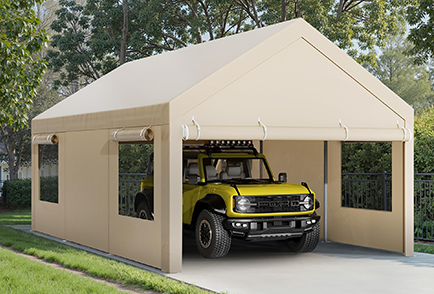
What is the Most Durable PVC Canopy Roof Material?

Home > Industry Solutions & Case Studies > What is the Most Durable PVC Canopy Roof Material?

Table of Contents

Among various roofing materials for outdoor canopies and shelters, high-quality PVC coated fabric is widely regarded as a leader in durability. This material is not ordinary plastic; it is a composite of a high-tenacity polyester fiber base fabric and an advanced polyvinyl chloride (PVC) coating. Its exceptional durability is first reflected in its outstanding tear resistance and tensile strength. The base fabric provides a robust skeleton, capable of withstanding strong winds, snow loads, and other external forces. The surface PVC coating acts as a comprehensive protective shield: it offers excellent UV resistance, protecting against long-term sun exposure, color fading, and aging brittleness. Simultaneously, it is completely waterproof, mold-proof, and corrosion-resistant, impervious to rain erosion and humid environments, and easy to clean. Many top-tier products incorporate additives like UV stabilizers and anti-microbial agents, and utilize technologies such as solvent-based top-coating finishes. These enhancements further improve self-cleaning properties, weather resistance, and service life, allowing it to reliably perform for a decade or more even under harsh outdoor conditions. For demanding applications, a specification like an 850-gram weight and 0.6mm thickness is common for a heavy-duty PVC canopy roof, providing an optimal balance of strength and longevity.
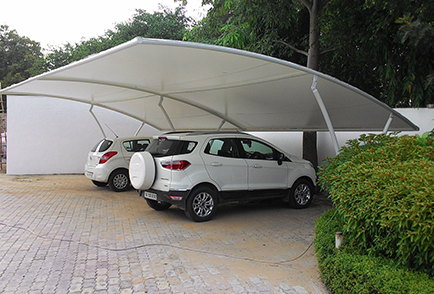
Beyond foundational durability, the advantages of modern high-performance PVC canopy materials extend to broad environmental adaptability and comprehensive value. It is suitable for diverse applications, from temperate to tropical climates, and from commercial structures to industrial warehouses. Whether resisting salt spray corrosion in coastal areas or withstanding chemical pollutants in industrial zones, it delivers consistent protection. Furthermore, premium PVC membrane typically offers good flame retardancy, meeting safety standards. From a long-term economic perspective, its extended lifespan translates to lower replacement frequency and maintenance costs. Additionally, light-colored PVC canopy roofs effectively reflect sunlight, reduce heat absorption, and provide a degree of thermal insulation for the space below. Therefore, choosing a high-grammage, advanced-coating PVC tarpaulin is not just selecting a robust roofing material; it is an investment in a long-lasting, reliable, and versatile protective layer for your outdoor or semi-outdoor space.
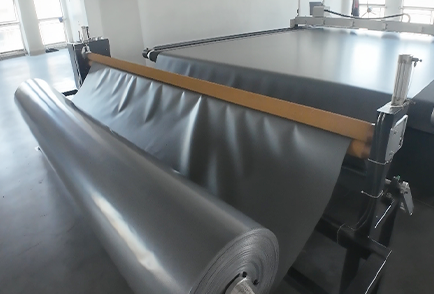
I. Can you build a carport with PVC tarp canopy?

The answer is clearly to build a carport with a PVC roof. Compared to hiring a professional to customize a carport, there’s no doubt that building one yourself after understanding the materials and process will save a significant amount of money.

Compared to other materials, PVC tarpaulins offer greater customization. You can choose the tarpaulin’s performance based on your needs. Besides basic waterproofing, if it’s for setting up carports or tents used outdoors for extended periods, you can choose tarpaulins with added UV protection (especially brightly colored tarpaulins, which can effectively prevent fading due to prolonged sun exposure). If used in densely populated areas, such as tent campsites or transparent tent hotels in scenic areas, you should choose tarpaulins with extremely strong flame retardant properties (currently, the most widely used flame retardant rating in Europe is the German standard, which requires a B1 rating for use in densely populated areas).

Of course, if you want to build your own carport, in addition to learning how to choose materials, hands-on skills and understanding whether the local government has any requirements for building carports without permission are also very important. Remember to ask and apply in advance.

II. What is the life expectancy of a pvc pipe canopy?

The lifespan of a PVC canopy typically ranges from 3 to 10 years, depending on the grade of the tarpaulin material, outdoor environmental conditions, manufacturing process, and daily maintenance. The core of a PVC canopy lies in its outer PVC-coated tarpaulin layer, which provides shade, rain protection, wind protection, and dust protection. Therefore, the durability of the tarpaulin itself directly determines the overall lifespan of the canopy.

High-quality PVC coated tarpaulins typically possess strong UV resistance, tensile strength, and abrasion resistance. Under conditions of direct sunlight and frequent exposure to wind and rain, ordinary-grade PVC tarpaulins may show signs of aging such as fading, surface micro-cracks, and hardening within 2–4 years; however, industrial-grade PVC tarpaulins with high UV protection formulations, added mildew inhibitors, and a wider temperature resistance range can have a lifespan extended to 5–8 years or even longer. For example, thicker coated tarpaulins (e.g., 650–900 gsm) generally offer better weather resistance and mechanical strength, making them more suitable for long-term outdoor erection than lightweight tarpaulins.

Furthermore, the usage environment has a significant impact on the lifespan of a canopy. Sustained high temperatures and strong ultraviolet radiation accelerate the decomposition of the PVC coating; strong winds can easily cause the tarpaulin to become fatigued from stretching; and high humidity or mold-prone areas also shorten the material’s lifespan. Conversely, if PVC canopies are used in mild climates without extreme weather and are not exposed to strong ultraviolet radiation for extended periods, their lifespan will be significantly extended.

Installation is just as important as routine maintenance. Proper tensioning, avoiding repeated violent swinging of the tarpaulin, and preventing friction with sharp objects can effectively reduce tearing and stress concentration. Simple daily maintenance, such as cleaning accumulated water, snow, and dust, keeping the surface dry, and regularly checking for loose fasteners, can significantly extend the canopy’s lifespan.

III. The simplest shelter is a PVC shelter

It is considered the most basic and easiest-to-build outdoor structure because PVC material is lightweight, inexpensive, and flexible in assembly. Moreover, it requires almost no specialized tools or skills to create a temporary space that provides shade and shelter from the rain. Whether for homes, farms, construction sites, or outdoor activities, PVC canopies are one of the most economical and practical choices.

First, the structure of a PVC shelter is very straightforward. It typically consists of a frame made of several PVC pipes, covered with a layer of PVC or PE tarpaulin. PVC pipes are lightweight, easily cut, and have highly versatile connectors, allowing even first-timers to assemble them quickly. This ease of use and operation makes PVC shelters a top choice for many families to temporarily build small sheds, storage sheds, or camping shelters.

Secondly, PVC shelters are more cost-effective than metal or wooden shelters. They require no expensive materials or complex foundation construction; just a few common PVC pipe fittings and a suitably sized tarpaulin are enough to create a practical sheltered space. Furthermore, they can be flexibly adjusted in size, shape, or purpose as needed, and are easy to disassemble, store, and reuse.

Functionally, PVC awnings, despite their simple structure, perform exceptionally well in most everyday environments. PVC tarpaulins offer excellent waterproofing and sun-blocking capabilities, handling ordinary rain, snow, and intense sunlight. They are perfectly adequate for everyday needs in homes, gardens, outdoor tool protection, and temporary storage. Using higher-grade PVC-coated tarpaulins can further enhance weather resistance and extend service life.

Despite their simple structure, PVC shelters also have certain limitations. For example, they are not as wind-resistant as metal structures, require reinforcement in extreme weather, and may age after prolonged exposure to strong ultraviolet radiation. However, for most lightweight, non-long-term applications, PVC shelters remain the most convenient, entry-level, and cost-effective choice.

Overall, PVC shelters are considered the “simplest form of shelter” because they are inexpensive, lightweight, easy to assemble, and versatile, making them ideal for users who need to quickly and flexibly create sheltered spaces.

IV. How to make a PVC pipe tent?

Material Needed

  • PVC pipes (commonly ¾”–1¼”)
  • pvc pipe connecter (T-joints, elbows, crosses, 3-way & 4-way fittings)
  • PVC pipe clamps or tarp clips (optional but very useful)
  • PVC tarpaulin o PE tarpaulin( choose products that meet environmental standards )
  • Rope, zip ties, or bungee cords
  • PVC cutter or saw
  • Rubber mallet (optional)

Instructions

First, cut the PVC pipes into the lengths you need, then assemble the frame by joining the pipes with the connectors to form the base and the roof shape. Once the structure is stable, drape the tarp over the frame and secure it with clamps, ropes, or zip ties so it stays tight and doesn’t move in the wind. After everything is fixed in place, your PVC pipe tent is ready to use.

Share Thisw Story:

祁欣煜

I am Felicia. I have been working in the PVC tarpaulin industry at Haining Lona Coated Material Co., Ltd. for nearly 10 years.With nearly 20 years of experience in the textile foreign trade industry. I am confident that my professional expertise and high-quality products will win your trust.