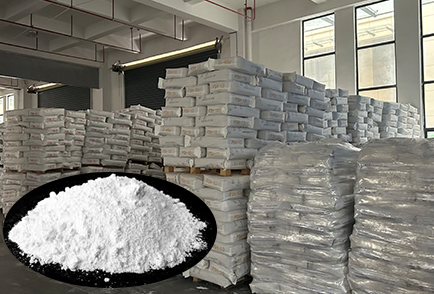
Logistics, agriculture, construction, transit, industrial packaging, and outdoor shelters all make extensive use of PVC tarpaulin. The PVC tarpaulin business is experiencing intense pricing rivalry due to rising worldwide demand. Calcium carbonate (CaCO3), a filler that may drastically lower production costs but can also lower product quality if handled improperly, is one of the main causes of these price swings.
This article explains what calcium carbonate is, how it influences the cost of PVC tarpaulin, why too much filling causes problems with performance, and how consumers may determine the appropriate quality level. The intention is to assist you in avoiding buying tarpaulins that “look heavy” but are prone to breakage, delamination, or early failure when exposed to UV light.

III. Excessive Filling Leads to Poor Quality in PVC Tarpaulins
It is both permissible and technically required to use moderate calcium carbonate filling.
However, quality starts to drastically decline when the CaCO3 level exceeds 25–35% of the PVC compound.
The common problems brought on by too much CaCO3 are listed below.
3-1. Reduced Flexibility and Brittle Performance
The resin and plasticizer give PVC its flexibility. CaCO3 particles behave like hard stones inside the material and do not flex.
Consequences:
- Brittle edges
- Cracking under cold temperature
- White crease marks
- Hard texture
This problem becomes extreme in winter when plasticizers contract.
3-2. Poor Tensile and Tear Strength
 Fillers weaken the molecular bonding between PVC layers and the polyester fabric.
Observable symptoms:
- Tearing close to eyelets
- Poor performance during tensioning
- Laminated layers separating
High-resin tarpaulin has 30–60% more tensile strength than high-filler goods, according to the ISO 1421 Strip Test.
3-3. Surface Chalking and Powder Release
When exposed to sunshine, excess CaCO3 migrates to the surface.
You’ll see:
- Powder residue on hands
- Chalky appearance
- Loss of color
- Faster UV degradation
This is confirmed by accelerated UV tests under ASTM G154.
3-4. Poor Weldability
Heat welding requires homogeneous PVC melt flow.
Large filler amounts interfere with this process.
Result:
- Weak weld seams
- Delamination after only weeks of use
- Inconsistent seal thickness
In ASTM D751 adhesion testing, high-filler tarpaulin often fails prematurely.
3-5. Lower Resistance to Temperature Change
High CaCO₃ tarpaulins:
- Crack at 0°C to 5°C
- Shrink or deform in high heat
- Lose flexibility after few months outdoors
Low-filler tarpaulins remain stable at -20°C to -30°C, depending on formulation.
3-6. Artificially Inflated GSM
Manufacturers will add extra calcium carbonate in order to “hit a target weight” at a lower cost. Strength and durability decline as weight increases.
Table 4. Performance Comparison: Balanced vs. Excessive CaCO₃
Property | Balanced Filler | Excessive Filler |
Tensile Strength | Strong | Weak |
Tear Strength | High | Poor |
Weld Strength | Good | Very poor |
UV Resistance | Stable | Severe chalking |
Cold Resistance | -20°C to -30°C | 0°C cracking |
Feel | Smooth | Dry, powdery |
These differences demonstrate why excessive filler is a major cause of failures in low-cost PVC tarpaulins.
IV. How to Identify and Choose?
Knowledge is the best protection for purchasers. Here are several dependable and useful methods for assessing PVC tarpaulin quality without the need for scientific equipment.
4-1. Fold and Bend Test
Fold the tarpaulin sharply:
- If it immediately leaves white marks → high CaCO₃
- If it bends smoothly → good resin ratio
A white crease indicates stress whitening caused by excessive filler content.
4-2. Surface Texture and Rub Test
Rub the surface lightly with your palm or finger.
- Powder comes off → excessive filler
- Smooth elasticity → balanced formulation
High CaCO₃ tarpaulins feel dry and chalky.
4-3. Tear Test on a Small Slit
Cut a small 1–2 cm slit on the edge and try to tear it:
- Weak, very easy tearing → high filler
- Resistant tearing → high resin content
This correlates strongly with ISO 4674 tear test results.
4-4. Smell Test
When PVC has enough resin and plasticizer, it smells slightly but identifiably like PVC.
Because there is less actual PVC inside, high CaCO₃ tarpaulin frequently has a very faint odor.
4-5. Compare Weight vs. Strength
Do NOT rely on GSM alone.
A high-filler 650gsm tarpaulin can be weaker than a 500gsm low-filler one.
4-6. Ask for TDS and Test Reports
Reliable suppliers should provide:
- ISO 1421 tensile strength
- ISO 4674 tear strength
- ASTM D751 adhesion strength
- UV resistance results (ASTM G154)
- Temperature resistance
- Material composition overview
Suspiciously low numbers often means:
→ High CaCO₃
→ Low resin
→ Short lifespan
4-7. Ask for Knife-coated or Laminated Options
If durability is critical:
- Prefer knife-coated tarpaulin (lower filler content, stronger structure)
- Laminated tarpaulins are more prone to filler abuse
4-8. Burn Test
 PVC melts and self-extinguishes.
CaCO₃ does not melt; it leaves ash.
During a burn test:
- High-resin tarpaulin → melts smoothly
- High-filler tarpaulin → crumbles into ash
This is one of the clearest indicators of excessive filler.