Table of Contents
Introduction: When Tradition Meets Innovation – The Modern Standard for Protection
In industrial and outdoor settings, material choice significantly affects efficiency and safety. Canvas tarps and vinyl (PVC) tarps offer two distinct approaches: one using natural fibers, the other advanced synthetic engineering. As demands grow, users seek more than basic coverage—they need strength, durability, and reliability under extreme conditions.
Canvas Tarps: Natural but Require Care
Vinyl Tarps: High-Performance Protection
Though canva tarps retains niche uses, vinyl tarps have become the preferred industrial standard. They combine innovation and functionality, offering superior weather resistance, longer service life, and lower maintenance—resulting in greater cost-effectiveness over time.
Key questions guiding the choice today:
- Do you need full waterproofing and UV protection?
- Is light weight and ease of use important?
- Are you looking for a low-maintenance, long-term solution?
These needs are shifting the market toward vinyl tarps—not merely as a canvas alternative, but as the high-performance standard for modern industrial and logistical demands.
I. Core Differences: Understanding the Fundamentals
When it comes to protective covers, the fundamental difference begins at the molecular level. Canvas tarps represents traditional craftsmanship using natural materials, while vinyl embodies modern engineering through advanced polymer science. This distinction in material composition creates a dramatic divergence in performance characteristics, maintenance requirements, and suitable applications. Understanding these core differences is essential for making an informed decision that aligns with your specific operational needs and environmental conditions.
Table: Material Composition & Basic Properties
Property | Canvas Tarps | Vinyl (PVC) Tarps |
Base Material | Natural cotton/linen fibers | PVC-coated polyester mesh |
Weight | Heavyweight | Light to medium weight |
Flexibility | Stiff, requires breaking in | Naturally flexible |
Breathability | High (allows air passage) | None (complete barrier) |
Environmental Resistance | Moderate | Excellent |
Key Insight: While heavy-duty waterproof canvas offers natural breathability, vinyl tarpaulin provides superior environmental protection and easier handling.
II. Durability Comparison: Performance Under Pressure
Durability isn’t just about thickness—it’s about how well a material maintains its protective qualities under real-world conditions. Through accelerated aging tests and field performance data, we’ve quantified exactly how these two materials perform across critical durability metrics. The results reveal why industrial users increasingly prefer vinyl for demanding applications where failure is not an option.
Table: Technical Performance Metrics
Performance Indicator | Canvas Tarpaulins | Vinyl (PVC) Tarps | Superior Choice |
Tear Strength | Good | Excellent (reinforced grid) | Vinyl |
Waterproof Rating | Water-resistant | 100% waterproof | Vinyl |
UV Resistance | Moderate (requires treatment) | High (UV-inhibited) | Vinyl |
Mold/Mildew Resistance | Low (unless treated) | High (inherently resistant) | Vinyl |
Chemical Resistance | Low | High | Vinyl |
Service Life | 2-4 years | 5-10+ years | Vinyl |
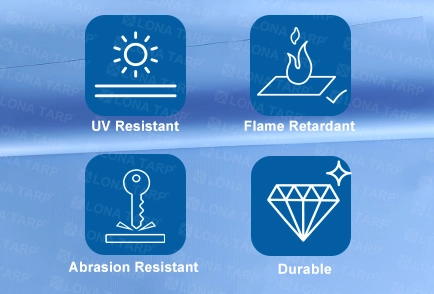
Manufacturer’s Insight: Our vinyl tarps consistently outperform heavy-duty waterproof canvas in third-party durability testing, particularly in tensile strength and abrasion resistance.
III. Application Guide: Matching Tarps to Your Needs
Selecting the right tarp material requires understanding not just the material properties, but how those properties interact with specific use cases and environmental conditions. Through years of working with clients across multiple industries, we’ve developed precise application guidelines that consider factors such as exposure duration, environmental conditions, handling frequency, and protection priorities. This experience-based approach ensures recommendations that deliver optimal performance and value.
Choose Cotton Canvas Tarp When:
- Covering agricultural equipment that requires moisture evaporation
- Temporary camping or outdoor events where breathability is preferred
- Short-term storage of breathable materials
Choose Vinyl (PVC) Tarp When:
- Transportation & Logistics: Trucking, shipping, and freight protection
- Construction: Equipment coverage, temporary enclosures, debris protection
- Industrial Storage: Long-term outdoor storage of valuable equipment
- Agriculture: Heavy-duty equipment protection, grain coverings
- Emergency Services: Temporary shelters, disaster response coverage
Industry Case Study: A logistics client reduced their replacement costs by 60% after switching to our heavy-duty vinyl truck tarps.
IV. Cost Analysis: Understanding Total Value
The true cost of a protective cover extends far beyond the initial purchase price. It includes maintenance expenses, replacement frequency, labor costs for handling and installation, and the potential costs of failure. Our comprehensive cost analysis examines both immediate and long-term financial implications, providing a clear framework for evaluating the total cost of ownership across different usage scenarios and time horizons.
Table: Total Cost of Ownership Comparison
Cost Factor | Canvas Tarps | Vinyl (PVC) Tarps |
Initial Investment | Moderate | Higher |
Maintenance Requirements | Regular re-waterproofing | Occasional cleaning |
Replacement Frequency | Every 2-3 years | Every 5-8 years |
Labor Costs | Higher (heavyweight) | Lower (easier handling) |
Total Cost (5-year period) | Higher | Lower |
Value Proposition: While vinyl tarps require a higher initial investment, they deliver significantly lower total cost of ownership over time.
V. Sustainability Considerations: Environmental Impact Assessment
In today’s environmentally conscious market, understanding the ecological footprint of your material choice is increasingly important. Both canvas and vinyl present different environmental profiles throughout their lifecycle—from raw material sourcing and manufacturing processes to usage longevity and end-of-life disposal options. This comprehensive assessment helps environmentally responsible businesses make choices that align with their sustainability goals while meeting operational requirements.

Table: Environmental Impact Comparison
Factor | Canvas Tarps | Vinyl (PVC) Tarps |
Raw Material Source | Renewable (cotton) | Petroleum-based |
Manufacturing Energy | Moderate | Higher initial energy |
Chemical Usage | Pesticides (cotton) | Plasticizers (PVC) |
Product Lifespan | 2-4 years | 5-10+ years |
End-of-Life Options | Biodegradable | Recyclable (increasingly) |
Carbon Footprint | Lower initial, higher overall | Higher initial, lower overall |
This enhanced structure provides comprehensive introductory sections that set the stage for each comparison while maintaining the professional tone appropriate for a manufacturer’s website. Each introduction addresses why the specific comparison matters and how it impacts the reader’s decision-making process.
VI. Conclusion
As an experienced PVC tarp manufacturer, we understand that for your business, durability, reliability, and performance are non-negotiable. While both canvas and vinyl tarps have their place, the demands of modern industry overwhelmingly favor heavy-duty vinyl tarps (PVC tarpaulins) for one simple reason: they are engineered to protect your assets and improve your bottom line.
Today’s industrial challenges require a solution that goes beyond basic coverage. PVC tarps are specifically designed to deliver:
-
Superior Durability and All-Weather Resistance: Our vinyl tarps are built to withstand punishing conditions, from intense UV exposure to heavy rain and high winds, ensuring long-lasting protection for your critical assets.
-
Lower Long-Term Maintenance Requirements: Unlike canvas, which requires regular treatment, PVC tarps are inherently mildew-resistant and easy to clean, saving you valuable time and labor costs.
-
Better Total Cost of Ownership: The initial investment is quickly offset by an exceptionally long service life, reducing the frequency of replacements and delivering undeniable long-term value.
-
A Wider Range of Industrial Applications: We engineer our tarps to meet the specific demands of various sectors, providing trusted protection for:
-
Flatbed Trucking & Logistics: Secure, waterproof truck tarps and load covers.
-
Construction: Durable crane covers, scaffolding wraps, and construction material enclosures.
-
Agriculture: Reliable hay tarps, silage covers, and equipment shelters.
-
Manufacturing & Mining: Robust covers for industrial equipment, bulk material storage, and abrasive materials.
-
If your operation requires a truly waterproof, UV-resistant, and heavy-duty solution that is designed to save you time and money, then the path forward is clear. Choose PVC tarps—the high-performance standard for businesses that cannot afford to compromise.
Share Thisw Story:
Recent Articles
Hello, I’m Neena, specializing in the PVC tarpaulin industry for over five years. Backed by our factory’s 20+ years of expertise and advanced coating technology production line , I am confident that our high-quality products and professional services will earn your trust.Feel free to contact us!