

Can Heavy Vinyl Tarps Be Heat Welded?
Table of Contents
If you work with high-quality PVC tarpaulin—whether for repairs, construction, or custom projects—this question has likely crossed your mind. Here’s the answer.
Heat welding is one of the most effective methods for creating strong, permanent, and fully waterproof seals or repairs on heavy-duty vinyl tarps. Whether used for joining materials for dust suppression covers, logistics and transportation tarps, storage and yard protection, or outdoor banner and printing media, heat welding ensures factory-grade seam quality. However, achieving proper results requires know-how, the right equipment, and a strong focus on safety procedures.
When welding industrial-grade PVC-coated fabrics, a professional hot-air welder with compatible welding rods is typically used. The process melts the material itself under controlled heat, allowing it to fuse together. Once cooled, it forms a highly durable bond that often matches the strength of the original material. This makes it ideal for producing items such as truck side curtains, temporary warehouse tents, or geomembranes for containment, where seam integrity is critical.
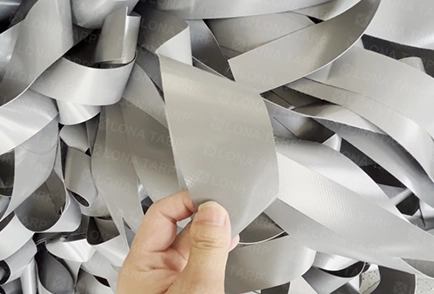
To ensure success, it’s essential to select the correct welding temperature and welding speed, and to keep the work area completely clean and dry. Any dust, moisture, or grease can compromise the weld. Always work in a well-ventilated space and wear appropriate personal protective equipment (PPE), including heat-resistant gloves and safety goggles, to protect against high temperatures and possible fumes.
In summary, with the right technique and strict adherence to safety, heat welding stands out as the most reliable and professional solution for joining or repairing heavy-duty vinyl tarps, meeting the stringent demands of B2B applications for performance and longevity.
I. Yes, China PVC Tarpaulins Can Be Heat Welded! But Here’s What You MUST Know First
 Before you fire up that heat welder, it’s essential to understand that not all tarps are created equal. Heat welding is specifically effective for PVC-coated vinyl tarps—synthetic fabrics with a polyvinyl chloride (PVC) coating that melts under controlled heat, enabling a strong, seamless fusion.
Key Safety and Preparation Notes:
Material Confirmation: Always verify that your tarp is PVC-based. Test on a small, inconspicuous area first to ensure compatibility.
Ventilation is Non-Negotiable: The welding process releases fumes. Work in a well-ventilated area or outdoors to ensure safety.
Fire Risk: High heat is involved. Keep a fire extinguisher nearby and avoid contact with flammable materials.
Personal Protective Equipment (PPE): Wear heat-resistant gloves, safety glasses, and a respirator mask to protect against burns and fumes.
Assuming your material—whether it’s industrial truck covers, warehouse curtains, outdoor event canopies, or pool liners—is suitable and you’ve taken all necessary precautions, you’re ready to begin the welding process.
II. Step-by-Step Guide: How to Use High Frequency PVC Tarpaulin Welding Machine
With your safety gear properly worn, follow these steps to achieve a clean, strong, and professional-grade weld every time—ideal for producing heavy-duty truck tarps, industrial warehouse curtains, agricultural pool covers, and outdoor event structures.
2-1. Clean the Surface Thoroughly
The welding area must be perfectly clean and dry. Any dirt, moisture, grease, or residue will prevent a proper bond. Use a lint-free cloth and isopropyl alcohol to wipe down both the tarp surface and any patch material—especially critical for large-format printing banners and marine covers where adhesion affects both durability and appearance.
2-2. Cut Your Patch or Seam Material
If performing a repair, cut a patch from spare PVC-coated fabric. Round the corners to help prevent lifting after welding. For seam welding—such as in producing industrial grain covers, temporary shelter tarps, or geomembranes for environmental protection—ensure edges are straight and clean to support long-term weather resistance.
2-3. Set Up Your Welding Tool
A professional hot air welder with adjustable temperature and speed control is required. Set the temperature to the appropriate PVC range—typically 300°C to 400°C (570°F–750°F). Always test on a scrap piece first. The goal is to melt the material without burning or scorching, preserving the integrity of materials used in construction screen fabrics and bulk storage covers.
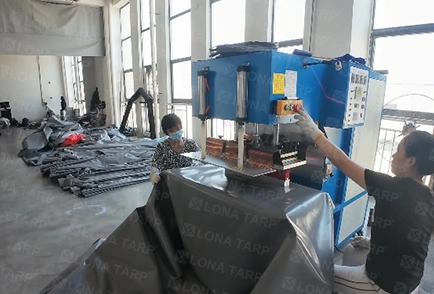
2-4. The Welding Technique
Position: Align the patch over the damaged area, or position the two seams to be joined—common in the assembly of transportation side curtains and flexible tank liners.
Tack Weld: Use the tack tip or low airflow to temporarily fuse a few spots and secure the material in place.
Main Weld: Attach the correct welding nozzle. Guide the tool evenly along the seam while simultaneously feeding a PVC welding rod into the hot air stream. The heat melts both the rod and the base material, fusing them into a continuous, waterproof bead essential for fuel tank diaphragms and spill containment berms.
Apply Even Pressure: Use the attached roller wheel to press the molten materials together firmly as you weld. This eliminates air pockets and ensures a uniform seal, critical for inflatable structures and high-strength industrial curtains.
2-5. Cool and Inspect
Let the welded area cool naturally—do not accelerate cooling with water or compressed air, as this can cause stress and weaken the bond. Once fully cooled, perform a visual and physical inspection: check for full adhesion and ensure there are no lifted edges or gaps. This final quality check is vital for applications such as floating covers and flexible roofing systems, where seam failure is not an option.
III. Heat Welding vs. Traditional Methods: Which Is Suitable for Your PVC Coated Tarpaulin?
Heat welding isn’t your only option. Here’s how it stacks up against other common repair methods to help you decide.
Feature | Heat Welding | PVC Tarpaulin Adhesive | Sewing |
Strength & Durability | Excellent. Creates a permanent, homogenous bond that becomes part of the tarp. | Good, but can become brittle over time and may peel with flexing. | Good, but punctures the fabric, creating new potential leak points. |
Waterproof Seal | Excellent. Creates a completely seamless, waterproof barrier. | Varies; can be good but may degrade with UV exposure and weather. | Poor. Requires an additional sealant tape over stitches to be waterproof. |
Skill & Tools Required | Requires practice and a specialized hot air welder. | Very easy; no special tools needed. | Requires a heavy-duty sewing machine and skill. |
Cost | Higher initial cost for the tool. | Low initial cost. | Medium cost for a capable machine. |
Best For | Permanent repairs, professional use, critical seams. | Quick, temporary field repairs. | Reinforcing seams on non-waterproof items or when welding isn’t an option. |
Verdict: Choose heat welding for the strongest, most durable, and completely waterproof repair. Opt for adhesives for quick fixes or if you lack the equipment. Sewing is best for structural reinforcement on non-critical or non-waterproof applications.
IV. Common Questions & Pro Tips about PVC Tarpaulin Sheets

Q: What if my welding rod isn’t sticking properly?
A: This common issue typically indicates one of three problems:
1) Temperature is too low, 2) Movement speed is too fast, or 3) Surface contamination remains. The solution is to slightly increase heat, slow your welding pace, and thoroughly re-clean the area—especially critical when working with industrial container covers and agricultural pond liners where seam integrity is paramount.
Q: How do I avoid burning or scorching the material?
A: Precise temperature control is essential. Always conduct a test weld on scrap material first. If you observe brown discoloration or the vinyl becomes excessively glossy and begins to sag, your temperature setting is too high. This is particularly important for printed advertising banners and marine upholstery applications where surface appearance matters.
Q: Can I substitute a standard heat gun for a professional welder?
A: While theoretically possible for minor repairs, this approach is not recommended for professional applications. Standard heat guns lack precision temperature controls and specialized nozzles required for consistent results. For geomembrane installations and large-scale shelter fabrics, investing in proper equipment ensures reliable, long-lasting seams.
Professional Tip: Enhanced Reinforcement Method
For critical repairs on high-stress areas—such as truck side curtains, industrial storage dome covers, or flexible tank containers—implement the “double weld” technique. First, weld the patch to one side, then flip the material and apply a second patch directly over the first on the opposite side. This sandwich reinforcement method creates exceptional durability for demanding applications.
Advanced Insight: Material Compatibility
When working with specialized materials like fire-retardant PVC fabrics or heavy-duty conveyor belt covers, always verify that your welding rod matches the base material’s composition. Incompatible materials will never achieve optimal bond strength, regardless of technique.
By mastering these troubleshooting techniques and professional methods, you can confidently extend the service life of your PVC-based industrial textiles while maintaining factory-grade quality in all your welding projects.
Share Thisw Story:

I am Suki. I’m working in the PVC tarpaulin industry at Haining LonaCoated Material Co., Ltd . Applying my PVC tarpaulin expertise, I deliver tailored solutions to meet your exact requirements, ensuring smooth project delivery through reliable products and dedicated support.