

Tensile Structure
Lightweight yet strong, reaching beyond limits
The tensile structure is the most classic and artistically expressive form of membrane architecture, as well as the most technically challenging category. It represents the core essence of membrane structure design: utilizing the tension generated by a flexible membrane under prestress to shape forms and bear loads.
A tensile structure is an architectural system that forms a stable three-dimensional curved surface by applying prestress to a flexible membrane, which is then tensioned and secured through a series of rigid boundary elements (such as masts, arches, and ring beams) and flexible boundary elements (such as steel cables and cable nets).
Its core principle is “tensile forming,” meaning the membrane material itself lacks stiffness and shape and must be “stretched tight” through externally applied tension to achieve a defined form and load-bearing capacity. This stands in sharp contrast to pneumatic structures, which are formed through “inflation and expansion.”
- Sports Stadiums
- Performing Arts & Cultural Centers
- Airport Terminals
- Railway Stations, Bus
- Transit Hubs
- Commercial Streets
- Arenas
- Amusement Parks
- Park Pavilions
- Exhibition Halls
- Parking Lot Sunshades
- Logistics Warehouses
- Wastewater Tank Covers
- Exposition Centers
Products for this application

1.15mm Sem-Cotead Tarpaulin – LPT1112/1437

1050Gsm PVC Sem-Cotead Tarpaulin – LPT1111/1050

1200Gsm PVC Laminated Tarpaulin Acrylic – LPT1104/1200
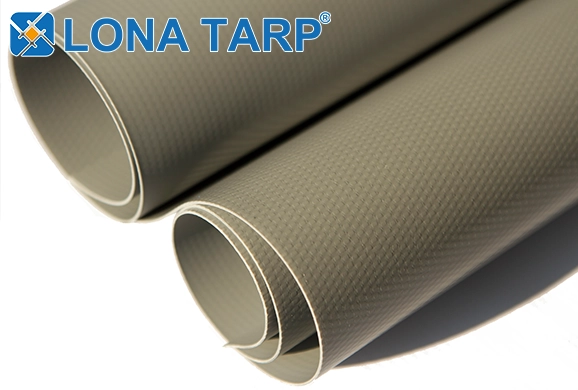
900Gsm PVC Laminated Tarpaulin – LPT1049/900
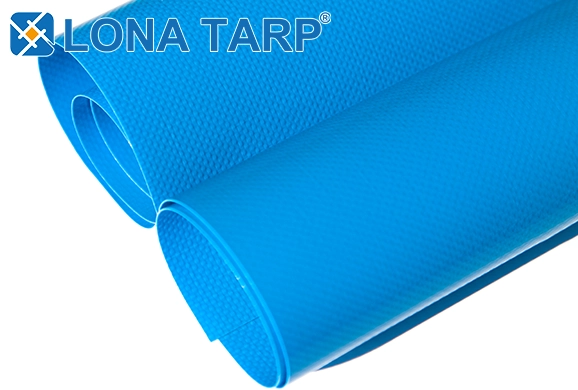
550Gsm PVC Laminated Tarpaulin – LPT1024/550

440Gsm PVC Semi-Coated Tarpaulin – LPT1021-440

550Gsm PVC Laminated Tarpaulin PVDF – LPT1008/550
Try LonaTarp® Customize Your Tarpaulin Now
- PVC Formulation Properties
- Strength, Weight and Thickness
- Glossy, Matte, Color, Print and 3D Embossed Patterns
- Tarpaulin Roll Sizes and Packaging
- Cutting, Heat Sealing, Sewing, Add Eyelets, and Accessories Purchasing
