

What is Flame Retardant Tarpaulin?
In large-scale outdoor event tents, construction site enclosures, truck tarpaulins, outdoor storage facilities, and more, have you noticed the presence of blue or white tarps? Have you ever wondered—if an accidental fire occurs and sparks fly, would it become a flammable fire hazard or a fire safety barrier? What kind of tarp material can prevent the spread of disaster?
Flame-retardant tarpaulin products can effectively serve as a fire barrier. It does not mean that the material itself is non-combustible, but rather that it possesses the ability to significantly slow down flame spread and self-extinguish upon removal of the ignition source. When exposed to a fire source, it can form a protective layer that insulates heat and blocks oxygen, buying valuable time for evacuation and firefighting efforts.
I. The Combustion Process and Characteristics of Tarps
First, we need to understand the combustion characteristics of the PVC and polyester fabric base when a PVC tarp burns.
Polyvinyl Chloride (PVC)
Pure polyvinyl chloride (PVC) has a relatively high ignition point (approximately between 380°C and 450°C), at which the molecular chains of PVC begin to break down. Under ordinary open flames (such as lighters or matches), it is generally not easy to ignite. Instead, it tends to soften, melt, and char first. Some rigid PVC products (such as water pipes), due to their chlorine content, inherently possess a certain level of flame retardancy and often cease burning once the flame source is removed.
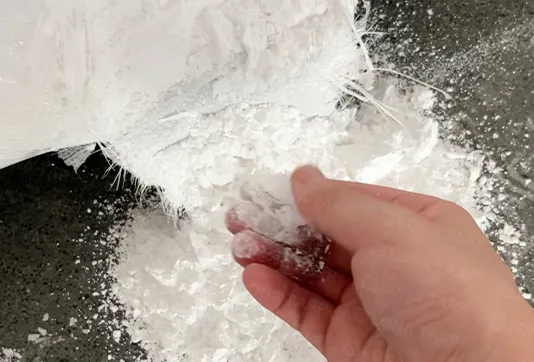
However, in the case of PVC tarps, plasticizers (typically organic compounds such as phthalates) are added in proportions as high as 30%–40% to make the PVC soft and foldable. Most of these plasticizers are flammable oily liquids, which significantly lower the material’s ignition point. When the temperature reaches approximately 160°C to 200°C, the plasticizers begin to volatilize and decompose extensively, producing flammable vapors.
If the tarp is directly exposed to an open flame (e.g., a lighter flame at about 300–500°C or welding sparks exceeding 2000°C), it can ignite almost instantly, as the flame temperature far exceeds the decomposition temperature of any component. The tarp will rapidly melt, shrink, and burn intensely.
Once ignited by an open flame, the heat released from combustion sustains the ongoing thermal decomposition and burning of the PVC resin itself.
Combustion Products of PVC
When PVC burns, it undergoes thermal decomposition and releases a variety of toxic substances. These hazards are far more dangerous than the flames themselves:
Hydrogen chloride (HCl) gas: This is the primary hazard. It is a highly irritating, corrosive, and toxic gas. Inhalation can severely irritate and damage the respiratory tract, causing coughing, suffocation, chemical pneumonia, and pulmonary edema. High concentrations can be rapidly fatal.
Dioxins and related compounds: Under conditions of low-temperature (approximately 200–450°C) and incomplete combustion, PVC can produce small but extremely toxic dioxin-like compounds. These substances are potent carcinogens and can persist and accumulate in the environment and living organisms, affecting the immune and reproductive systems.
Carbon monoxide (CO) and other toxic organic compounds: Like most carbon-based materials, incomplete combustion generates colorless, odorless, yet deadly carbon monoxide, as well as other toxic gases such as benzene.
In enclosed or semi-enclosed spaces (such as warehouses, workshops, or construction site shelters), the toxic smoke produced by burning PVC tarps is the leading cause of fire-related injuries and fatalities.
Polyester Fiber
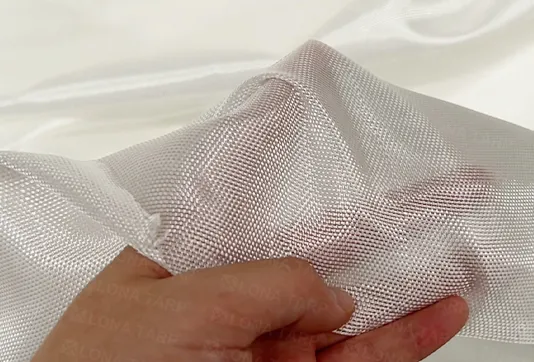
Polyester fiber has a melting point of approximately 250°C–260°C and a glass transition temperature of about 70°C. When the temperature reaches the melting point, the fibers do not immediately ignite; instead, they first soften, shrink, and melt.
After melting, the polyester polymer chains begin to break down under high temperature (thermal decomposition), producing a series of flammable gases (such as acetaldehyde, benzene, ethylene, carbon monoxide, etc.). When these flammable gases mix with oxygen in the air and encounter an open flame or sufficiently high temperature, they ignite, forming flames on the surface of the material. Its ignition temperature is approximately 380°C–450°C.
Once ignited, polyester fiber burns intensely and rapidly, with a yellow flame accompanied by black smoke (carbon black particles). Polyester fiber does not have self-extinguishing properties and will continue to burn until the fuel is exhausted. This is because the substantial heat released during combustion continuously melts and decomposes the material ahead of the flame, supplying fuel to sustain the fire.
Combustion Products of Polyester Fiber
After polyester burns, the residue mainly consists of brittle, hard, blackened char, sometimes with hardened edges formed from melted and re-solidified material. Unlike cotton fabric, it does not completely turn to ash.
The combustion primarily produces carbon monoxide (CO), dense smoke (carbon black), and small amounts of toxic gases (such as acetaldehyde). Although the toxicity of its smoke is far lower than the hydrogen chloride and dioxins produced by PVC, the thick smoke can severely obstruct visibility, cause suffocation, and the carbon monoxide is lethal.
II. Why is Flame-Retardant Tarpaulin Flame Resistant?
After understanding the combustion process of ordinary tarpaulins, it is clear that both PVC and polyester fibers are combustible materials. To meet higher flame-retardant standards (such as Chinese, European, or American standards). Currently, our commonly used solutions include:
Adding Flame Retardants to Polyvinyl Chloride (PVC)
In the production of custom PVC tarpaulins, specialized flame-retardant systems are incorporated during the PVC plastication process. This forms the core of the flame-retardant functionality, with the appropriate proportion of flame retardants added based on the customer’s required flame-retardant standards. These flame retardants primarily operate through the following mechanisms:
Key Flame-Retardant Mechanisms
Gas-Phase Flame Retardancy (Suffocation Effect):
- When the tarpaulin is exposed to flames, the flame retardants decompose under heat, releasing non-combustible gases (such as nitrogen, carbon dioxide, water vapor, etc.).
- These gases dilute the concentration of flammable gases (e.g., hydrocarbons from PVC decomposition) and oxygen in the flame zone, “suffocating” the fire and hindering sustained combustion.
Condensed-Phase Flame Retardancy (Barrier Layer and Char Formation):
- Certain flame retardants (e.g., aluminum hydroxide, magnesium hydroxide) absorb substantial heat during thermal decomposition (endothermic reaction), lowering the material’s surface temperature and delaying the thermal decomposition process.
- Simultaneously, their decomposition products form a dense, stable metal oxide protective layer (e.g., aluminum oxide, magnesium oxide) on the material surface. This barrier isolates oxygen and heat from penetrating deeper layers, prevents further decomposition of internal combustibles, and blocks external flame intrusion.
Some phosphorus-based or nitrogen-based flame retardants promote the formation of an expanded, porous char layer on the PVC surface during combustion. This char layer, with its loose structure, acts as an effective barrier against heat and oxygen.
Interruption of Chain Reactions (Free Radical Trapping):
- Combustion is essentially a free radical chain reaction process. Certain flame retardants (particularly halogen-based systems synergized with antimony trioxide) decompose at high temperatures to release active free radicals. These radicals trap high-energy free radicals (e.g., hydrogen and hydroxyl radicals) generated during combustion, thereby interrupting the combustion chain reaction and extinguishing the flame.
Melting Dripping and Heat Absorption:
- Although dripping is generally undesirable for PVC tarpaulins (as drips may ignite other materials), formulation adjustments can enable the material to soften and absorb heat at specific temperatures, thereby delaying fire spread to some extent. However, high-quality flame-retardant tarpaulins prioritize forming a protective layer over promoting dripping.
Uniform dispersion of flame retardants is critical. Through processes such as high-speed mixing, internal mixing, calendaring, or coating, flame-retardant microparticles are evenly distributed within the PVC coating and fabric layers. This ensures consistent flame-retardant performance across any part of the tarpaulin when exposed to a flame source.

III. What Are the Standards for Flame-Retardant Tarpaulins?
Test Methods
All standards revolve around several core test methods, the most common of which include:
Vertical Burning Test: The sample is suspended vertically, ignited at the bottom, and parameters such as flame spread rate, afterflame time, afterglow time, and damaged length are measured.
Limiting Oxygen Index (LOI) Test: Determines the minimum oxygen concentration in a nitrogen‑oxygen mixture required to sustain combustion of the material. A higher LOI value indicates that the material is more difficult to burn.
Horizontal Burning Test: Evaluates the flame spread rate of the material in a horizontal orientation.
Major National and Regional Standards
Chinese National Standards
GB 8624-2012 “Classification for Burning Behavior of Building Materials and Products”
This is China’s core standard for the fire performance of building materials and applies to tarpaulins that may be used in construction-related contexts.
Common classifications:B1: Flame-retardant materials. This represents a higher requirement for tarpaulin flame retardancy, involving strict combustion tests with limited flame spread and self-extinguishing upon flame removal.
B2: Combustible materials with flame-retardant effects, which are more difficult to ignite or exhibit slower flame spread compared to ordinary materials.
B3: Flammable materials (not meeting flame-retardant requirements).
GB/T 5455-2014 “Textiles—Burning Behavior—Determination of Damaged Length, Afterglow Time, and Afterflame Time in the Vertical Direction”
This standard specifies the vertical burning test method specifically for textiles and serves as the fundamental method for evaluating the flame-retardant performance of tarpaulins (particularly the base fabric).
European Standards
EN 13501-1 “Fire Classification of Construction Products and Building Elements—Part 1: Classification Using Data from Reaction to Fire Tests”
This is the unified European standard for classifying the fire performance of construction products. It is similar to the Chinese GB 8624 but uses a different classification system.
Common classifications:B-s1, d0: For products other than “floor coverings,” Class B indicates “sufficient flame-retardant capability when exposed to a single burning item,” with s1 representing low smoke emission and d0 indicating no burning droplets. This is a high commercial flame-retardant classification.
C-s1, d0 is also a commonly required classification.
EN 13773 “Textiles and Coated Fabrics—Burning Behavior Specifications for Fabrics for Tents and Large Tents”
This is a European standard specifically for fabrics used in tents and large tents (including tarpaulins). It categorizes materials into Class 1, Class 2, and Class 3 based on vertical burning test results, with Class 1 offering the best flame retardancy.
American Standards
NFPA 701 “Standard Methods of Fire Tests for Flame Propagation of Textiles and Films”
Developed by the National Fire Protection Association (NFPA), this is the most widely accepted and referenced standard in North America for flame-retardant testing of textiles (including tarpaulins).
Test methods:NFPA 701 Test 1: Applicable to lightweight single-layer fabrics.
NFPA 701 Test 2: Applicable to heavier or multi-layer fabrics, decorative hanging fabrics, and fabrics for tents and large tents.
Key requirements: After vertical burning tests, the afterflame time must not exceed 2 seconds, the damaged length and fragment mass must meet specified limits, and droplets must not ignite the cotton below.
ASTM/UL Standards: Standards such as UL 214 and ASTM D6413 (vertical burning test) are also commonly referenced.
French Standard
- NF P 92-507 – Fire Safety Tests for Building Materials – Vertical Burn Test for Flexible Materials (Textiles, Films, etc.)
Developed by the French Standardization Association (AFNOR), this is a mandatory classification system for the fire safety of building materials and specific-use materials—including tarpaulins, PVC covers, and tents—in France, with significant influence across European and French-speaking markets. - The system classifies materials by flame-retardant performance from highest to lowest: M0 (non-combustible), M1 (flame-retardant), M2 (combustible with slow flame spread), M3 (combustible with moderate flame spread), and M4 (flammable). For commercial applications such as PVC tarpaulins and industrial covers, M1 rating represents the highest and most widely required level.
Key Requirements for M1 Certification:
Self-extinguishing time: After removing the ignition source, any open flame on the sample must self-extinguish within a very short period (typically within seconds).
Damage length: The charred or damaged length of the material must not exceed strict limits specified by the standard.
Dripping behavior: Any burning or melting droplets must not ignite a standard cotton pad placed underneath.
Flame spread speed: Throughout the test, flames must not spread rapidly across the material surface.
Based on the test results, materials are assigned a corresponding fire rating (such as M1 through M4, with M1 being the highest flame-retardant class).
Related Standard:
NF P 92-500 series – French standard for fire performance classification of building materials, often used in conjunction with NF P 92-507 to determine the final fire rating (M-class) of materials, especially flame-retardant tarpaulins and fireproof fabrics.
Other Important Standards
Maritime and Shipping: If tarpaulins are used on ships, they must comply with the International Maritime Organization (IMO) FTPC Code, particularly Part 7 (requirements for vertical surface materials).
Military Standards: Standards such as MIL-C-44187 impose special, stringent flame-retardant requirements for military tarpaulins.
IV. Intuitive Determination of Flame-Retardant Tarpaulin Grades
While an intuitive assessment of flame-retardant tarpaulin grades cannot replace authoritative laboratory test reports, this verification method for testing the flame-retardant performance of tarps can serve as an effective preliminary screening and evaluation tool. It helps you understand the quality of the PVC material in your possession and avoid being misled by unscrupulous manufacturers.
Caution: This method involves risks and should only be applied to small samples (such as cuttings) taken from bulk goods. Testing must be conducted in an open, well-ventilated area free of flammable materials, with firefighting water sources prepared and operated by designated personnel.
B1 Flame-Retardant Tarpaulin
B2 Flame-Retardant Tarpaulin
B1 Class Fire Retardancy: The PVC tarpaulin self-extinguishes immediately upon removal of the ignition source, with no afterflame.
B2 Class Fire Retardancy: The PVC tarpaulin self-extinguishes within 3 seconds upon removal of the ignition source.
V. Summary and Important Notes
The flame retardancy of PVC tarpaulin = the proportion of flame retardants in the PVC + uniform production processes.
Important Notes:
- “Flame retardant” does not mean “non-combustible”: The significance of flame retardant tarpaulin lies in retarding the burning rate, inhibiting flame spread, and self-extinguishing when removed from the flame, thereby buying valuable time for firefighting and evacuation. It cannot completely prevent ignition or remain unburned in intense fires.
- Performance is graded: Flame retardant properties are subject to different testing standards (such as GB/T 5455, EN 13501, NFPA 701, etc.) and classifications (e.g., Class B1 flame-retardant material). Products should be selected according to the specific application and corresponding grade requirements.
- Durability: Flame retardant performance may gradually degrade with prolonged use, exposure to sunlight, rain (UV radiation, washing), and wear.
Therefore, flame retardant PVC tarpaulin is a safety material that achieves effective flame retardation through meticulously designed chemical formulations, intervening in the combustion process across multiple aspects such as heat, oxygen, and combustible materials.
Share Thisw Story:
Table of Contents

Adam Lu
I am Adam LU, CEO of Haining Lona Coated Materials Co., Ltd. I run a factory with over 100 employees. I have been working in the PVC tarpaulin industry for over 20 years.
Try LonaTarp® Customize Your Tarpaulin Now
- PVC Formulation Properties
- Strength, Weight and Thickness
- Glossy, Matte, Color, Print and 3D Embossed Patterns
- Tarpaulin Roll Sizes and Packaging
- Cutting, Heat Sealing, Sewing, Add Eyelets, and Accessories Purchasing
