

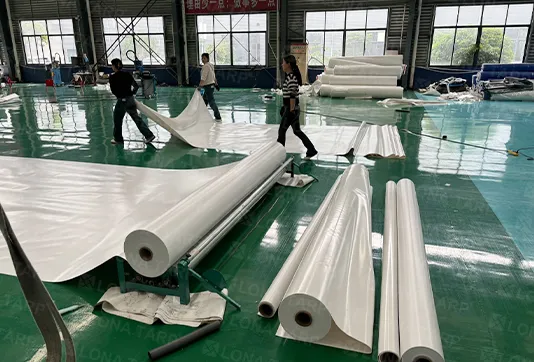
 In the fiercely competitive logistics and transportation sector, every decision impacts costs, efficiency, and customer satisfaction. Choosing the right PVC tarpaulin thickness is central to this asset’s performance. We offer customizable PVC tarpaulin truck cover thickness ranging from 0.3mm to 2.0mm (12mil to 79mil). It directly influences product durability, protective capabilities, service life, and ultimately, your business profitability and market competitiveness. Selecting the wrong thickness can lead to high costs from frequent replacements, risks of cargo damage claims, and loss of customer trust. Choosing the right thickness translates to lower total operating costs, stronger service reliability, and more stable business partnerships. This is a strategic investment decision worthy of thorough analysis.
I. What is Your PVC Tarpaulin Truck Cover Intended to Transport?
 This is the main factor that determines the thickness of the PVC tarpaulin truck cover. Different types of goods impose vastly different protection demands on truck tarpaulins.
When transporting light, dry, non-damage-prone packaged goods (e.g., apparel, light industrial products), standard-thickness PVC tarpaulin covered truck (0.45mm to 0.60mm) typically offer excellent value. This range provides adequate resistance against everyday rain, wind, and general friction encountered during road transport, while maintaining the PVC truck tarpaulin’s lightness and relatively low cost.
However, when your cargo are heavy, sharp-edged, or fragile items (e.g., large machinery parts, metal construction materials, stone, ceramics), the risk factor escalates dramatically. Movement, friction, or accidental impacts during transit can easily scratch, puncture, or tear thinner tarpaulin truck. In these cases, upgrading to reinforced PVC tarps of 0.70mm to 0.90mm or thicker is strongly recommended. Increased thickness significantly enhances material tear resistance and abrasion resistance, creating a physical barrier for high-value or fragile goods.
For customers handling bulk commodities (e.g., coal, ore, sand, grain), tarps endure massive static loads and continuous rough handling from equipment (like loaders, grabs) and friction from sharp materials. Heavy-duty truck tarpaulins (0.80mm to 0.90mm or thicker) are essential.
These often feature high-denier polyester base fabric and thickened PVC coatings, offering exceptional tensile strength and bursting strength to withstand sustained wear and localized high-pressure impacts, greatly extending service life in extreme conditions. For special cargo like chemical liquids (requiring leak-proofing), corrosive materials (requiring chemical resistance), or temperature-sensitive goods (requiring insulation), thickness alone isn’t enough. Pay attention to coating formulations (e.g., special stabilizers, flame retardants, UV inhibitors) and potential composite laminates, though increased thickness (e.g., 0.80mm+) often forms the foundation for enhancing these specialized protective properties.
II. How Significantly Does the Environment Impact PVC Truck Tarpaulin?
PVC truck cover tarpaulins don’t operate solely in mild, ideal conditions. Harsh environments continuously test PVC truck tarpaulins.
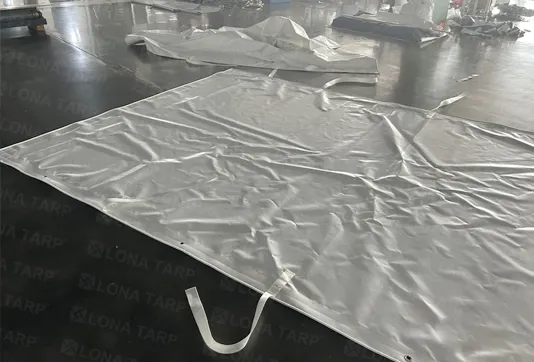 In regions with intense sunlight exposure (e.g., Africa, Southeast Asia,the Middle East), ultraviolet (UV) radiation is the primary cause of heavy duty truck tarpaulin degradation. It breaks down PVC molecular chains, leading to PVC coating chalking, brittleness, fading, and ultimately, loss of waterproofing and strength. For operations in high-altitude, coastal, or tropical areas, selecting 0.55mm PVC tarpaulin or greater thickness with built-in high-efficiency UV stabilizers is crucial. A thicker coating means more UV absorber/reflector material is present, providing longer effective protection.
Rainy, humid, or coastal salt-spray environments demand PVC tarps with persistent, reliable waterproof sealing and mildew resistance. Thicker PVC coatings (0.50mm+) more effectively cover base fabric gaps, reduce pinholes, deliver superior hydrostatic head performance, and delay base fabric rot caused by moisture penetration.
For frigid regions, thicker truck tarps (e.g., 0.70mm+) typically use cold-resistant plasticizer formulations, maintaining excellent flexibility (down to -40°C) to avoid cracking due to embrittlement. Additionally, thicker material itself offers slightly better insulation.
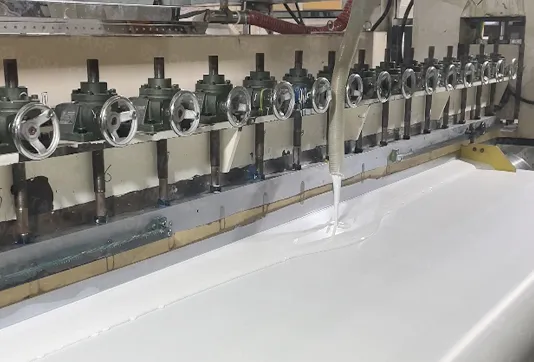
Frequent long hauls, poor road conditions (potholes, gravel), and high-speed driving causing significant wind load constantly test a PVC truck tarpaulin’s mechanical strength. Thicker tarpaulin truck cover possess superior resistance to wind buffeting fatigue and dynamic tearing, proving especially valuable in container transport or high-speed logistics corridors.
III. PVC Tarpaulin Truck Side Curtain Wear Depends on use Intensity and Frequency
 The intensity of PVC tarpaulin truck side curtain use is the core factor determining its wear rate. For high-intensity fleets operating daily with multiple load/unload cycles year-round, PVC truck side curtain face constant stress: rope pulling, metal fastener friction, manual or mechanical (e.g., forklift) scraping, and crease fatigue from frequent folding. PVC tarps of 0.70mm to 0.90mm or thicker are the standard for such demanding applications. Their advantages are:
Doubled Abrasion Resistance: A thicker surface coating withstands significantly more scrapes and friction, markedly delaying wear-through.
Superior Tear Resistance: Handles greater unexpected pulling forces (e.g., snagging), resisting small tear formation and propagation.
Resistance to Repeated Folding: Thicker PVC tarpaulin truck side curtain materials resist premature cracking at fold lines under high-frequency use.
Extended Replacement Cycles: While the initial purchase cost is higher, the longer lifespan reduces the annualized cost, leading to a lower Total Cost of Ownership (TCO). For customers with medium or low usage intensity (e.g., regional short-haul, seasonal transport, spare vehicles), standard thickness tarpaulin for truck side curtain (0.50mm to 0.70mm) may be more economical. Ensure key specs (like peel strength, low-temperature resistance) meet standards to handle occasional harsh weather or handling demands. Regardless of thickness, choosing tarps with extra reinforcement at critical stress points (corners, rope grommets, metal fastener contact zones) – via wear patches, double coating, or thickened ribs – smartly boosts the lifespan of vulnerable areas.
IV. Regulations, Cost & Operational Efficiency: Calculating the “Economics” of Thickness
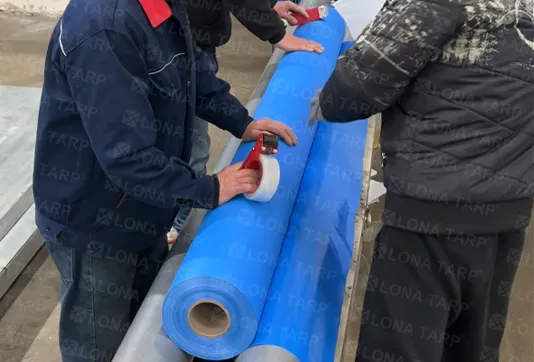 Choosing truck tarpaulins thickness cannot be divorced from business realities. Consider regulatory constraints, direct costs, indirect costs, and efficiency factors. Total truck covered with tarpaulin weight (including cargo and tarps) is strictly regulated (e.g., Overload Standards). While the weight increase from a single thick tarp might seem minor, using ultra-thick truck tarpaulin materials (e.g., 1.2mm) on large trucks (e.g., 17.5m flatbeds) adds noticeable weight (potentially tens of kg). When operating near weight limits, precisely calculate the economic impact of reduced payload capacity due to the heavier tarp, balancing protection needs against freight revenue. Clearly, raw material consumption correlates directly with thickness. A 0.70mm PVC tarp costs approximately 30% more than a 0.50mm PVC tarp of the same area. However, the true cost is the Total Cost of Ownership (TCO):
Thicker = More Durable = Longer Replacement Cycles:A high-quality 0.70mm waterproof truck tarpaulin might last 1.5x or even 2x longer than a standard 0.50mm waterproof truck tarpaulin.
Reduced Repair Costs:Thicker tarpaulin covers trucks are less prone to damage, saving on patching materials, labor, and downtime.
Lower Cargo Damage Risk:Avoids costly compensation and client claims caused by wet, contaminated, or lost goods due to truck tarp failure.
Less Downtime:Fewer delays caused by PVC tarpaulin issues mean higher vehicle availability. Thicker truck cover PVC tarpaulins are usually heavier and stiffer, potentially increasing handling difficulty and labor during manual deployment/removal. Large fleets prioritizing handling efficiency should assess operational ease. Thicker, more abrasion-resistant PVC tarpaulin for truck covers mean fewer repairs and replacements, significantly saving fleet management effort, reducing emergencies, and boosting overall operational fluidity.
VI. Key Indicators for Ensuring Superior Quality of Truck Tarpaulin Materials
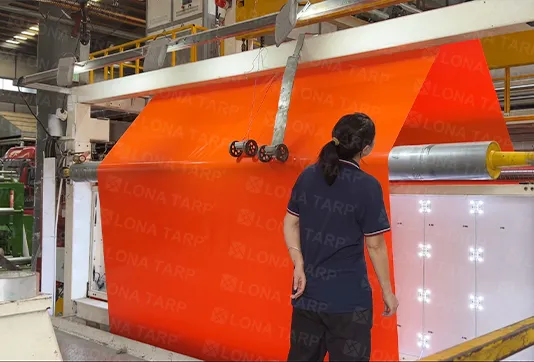 Tarpaulin cover for trucks thickness is core, but not the only factor. Once you’ve identified the target thickness range, rigorously evaluate potential suppliers’ products on these critical performance indicators to ensure genuine “thick and durable” quality:
Base Fabric Strength:High grammage, high-denier (e.g., 1000D, 1200D, 1500D) quality polyester base fabric is the tarp’s robust skeleton. Focus on warp/weft tensile strength (N/5cm).
Peel Strength:Measures the bond adhesion between PVC coating and base fabric (N/cm). Low peel strength causes coating separation (blistering, peeling) under stress or use, completely nullifying protection. Premium thick tarps must have excellent peel strength (e.g., ≥50 N/cm).
Weather Resistance:Confirm UV aging resistance (e.g., via GB/T 16422.3 Xenon Arc test, ensuring strength retention after specified irradiation), high/low-temperature resistance (no cracks at -30°C bend test), and anti-mildew rating.
Waterproof Performance:Hydrostatic Head (mmH₂O) is a critical metric; higher values mean more reliable waterproofing. Quality thick tarps should have very high hydrostatic head (e.g., ≥3000mm).
Environmental & Safety Compliance:Meets RoHS, REACH, etc., free of banned plasticizers (e.g., phthalates). Consider flame retardancy (e.g., DIN 4102 B1, EN 13501) for specific scenarios.
VII. Choosing High-quality Tarpaulin Truck Delivers Greater Profitability and Enhanced Market Competitiveness
 Choosing the PVC thickness for your truck tarpaulin is far more complex than simply opting for “thicker” or “thinner.” It’s a strategic decision requiring holistic consideration of cargo risk, environmental challenges, usage intensity, regulatory costs, and core business objectives. Fabricators: Providing thicknesses that precisely match customer needs is fundamental to winning orders and minimizing after-sales disputes. Distributors: Building trust as a “Thickness Consultant” with fast, expert solutions and reliable inventory defines your channel value. Engineering Service Providers: Investing in truly durable thick tarps is the smart choice for controlling total operating costs, guaranteeing service delivery, and building market reputation. Every precise thickness selection builds a stronger competitive advantage for your business.
Now is the Time to Maximize Your Tarpaulin Investment!
Are You a Fabricator? Request our Free *”Detailed Technical Specs & Factory Price List for High-Value Mainstream Thickness Tarps (0.70mm-0.90mm)”* to optimize your product line!
Are You a Distributor? Request our Free *”Stock Availability List & Distributor Support Policy for Top-Selling Gold Thickness Tarps (0.50mm & 0.70mm)”* to seize market opportunities!
Are You an Engineering Service Provider/Large Fleet? Apply for a Free “Customized Thickness & Reinforcement Solution Consultation “ tailored for your fleet’s optimal protection and significant annual cost reduction!
Contact Us Immediately via [apple@lonatarp.com] or [+86 159 8832 6300].
Specify your customer type (Fabricator/Distributor/Service Provider), We will provide precise thickness solutions and highly competitive quotes! Don’t let incorrect thickness choices continue to erode your profits and customer trust. Choose Expertise. Choose Durability. Choose Value Maximization!
