

Inflatable Building Membrane, Pneumatic Membrane, and Tensile Membrane Material
The architectural landscape is constantly evolving, driven by innovations in materials and engineering. Among the most transformative advancements in contemporary construction and temporary infrastructure are membrane structures. These lightweight, flexible, and highly adaptable systems—encompassing inflatable building membranes, pneumatic membranes, and tensile membrane materials—offer unparalleled design freedom, efficiency, and functionality. This blog explores these cutting-edge technologies, their key properties, manufacturing expertise, and how they are redefining modern architectural possibilities.
I.What Is Inflatable Building Membrane
An inflatable building membrane is a high-performance technical textile and structural system that uses pressurized air (typically low-pressure) to support a flexible envelope and maintain its shape and rigidity. Unlike traditional buildings with static frameworks, these structures are dynamic; their stability stems from the constant pressure difference between the interior and exterior, forming a stable architectural enclosure without relying on rigid frames.
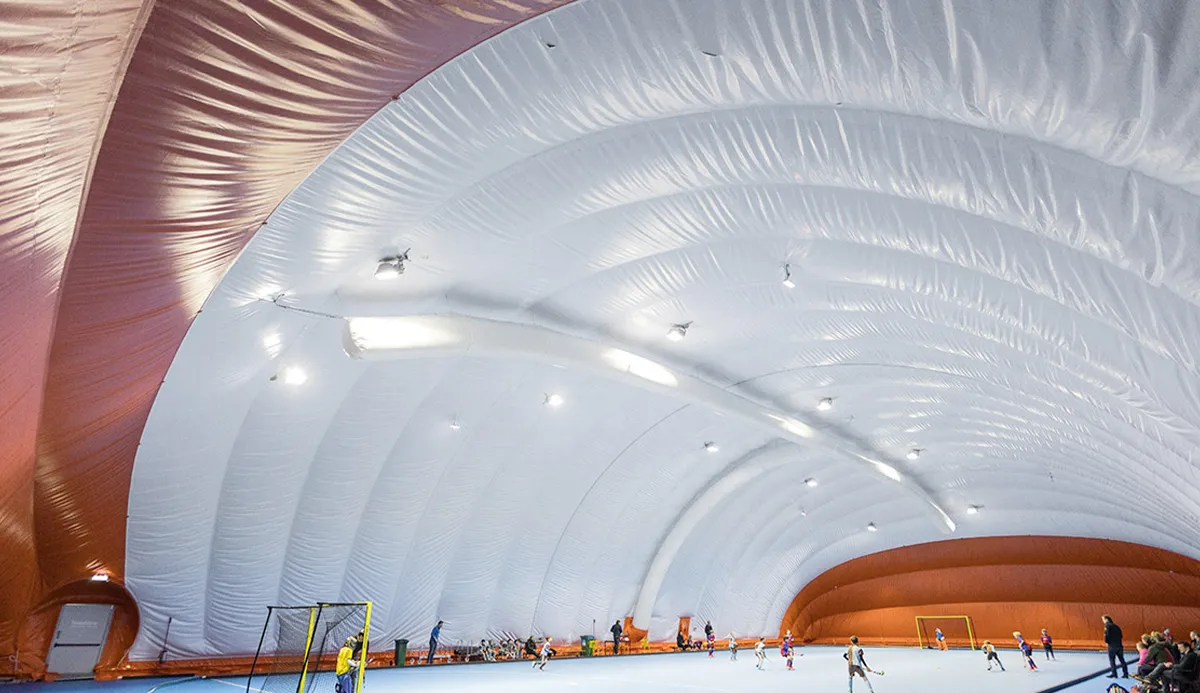
The core component is the membrane itself—a high-strength, coated fabric that serves as both the building envelope and the primary structural element. Typically crafted from PVC-coated polyester fabric or similar composite materials, inflatable building membranes combine strength, flexibility, and airtightness. The coating system provides weather resistance, UV stability, fire retardancy, and long-term durability, making them suitable for continuous outdoor use in diverse climates. When inflated, they create a spacious, column-free interior environment. Modern inflatable membranes are engineered with advanced fabrics and airtight sealing technologies to ensure enhanced durability, climate control, and energy efficiency.
Common applications include sports domes, warehouses, exhibition halls, temporary event venues, emergency shelters, immersive entertainment environments, and other temporary or semi-permanent buildings. Their primary advantages lie in rapid deployment, portability, and the ability to create large, clear-span spaces with minimal foundational requirements.
II.Pneumatic Membrane vs Tensile Membrane Material
While both pneumatic membranes and tensile membranes fall under the category of architectural membranes and utilize tensioned fabrics, their structural principles, material requirements, and applications differ significantly. Understanding this distinction is critical for selecting the right solution for any project.
- Pneumatic (Air-Supported or Air-Inflated) Membranes: These materials are designed to operate under internal air pressure, with the structure’s stability dependent on a controlled air supply system. In air-supported structures, the entire single-membrane envelope is pressurized; in air-inflated structures, pressurized air beams or cushions act as discrete supporting elements. Pneumatic membranes must exhibit excellent airtightness, tear resistance, and fatigue performance—materials often feature robust, impermeable coatings (such as PVC or thermoplastic polyurethane) and are sealed using high-frequency welding or advanced adhesives. They require a continuous (or monitored) air supply from fans or HVAC systems, offer excellent insulation properties when using double-layer membranes, and are ideal for temporary or semi-permanent structures requiring full environmental separation, while also enabling large, column-free spaces and rapid installation.
- Tensile Membrane Structures: These rely on mechanical tension through cables, steel frames, or masts—rather than air pressure—with the membrane primarily functioning under tension. The shape is derived from manipulating surface curvature under tension, following anticlastic (double-curved) principles for stability. Tensile membrane materials must possess extremely high tensile strength, dimensional stability, and low creep behavior (resistance to permanent stretching). Coated fabrics like PTFE-coated fiberglass or PVC-coated polyester are standard, valued for their strength and longevity. These structures are suited for permanent or long-span installations, remain stable without continuous mechanical input, and are renowned for their iconic, sculptural aesthetics, as seen in stadium roofs, airport terminals, and architectural canopies.
In summary: Pneumatic membranes prioritize airtightness and pressure resistance, while tensile membranes focus on tensile performance and structural geometry. Simply put, pneumatic membranes are pressure-active structures, while tensile membranes are form-active structures—the choice depends on factors such as permanence, span, architectural intent, and operational considerations (e.g., the need for continuous air pressure).
III.Key Properties for Inflatable Structures
Inflatable structures require a precise balance of mechanical and functional properties, and selecting the right membrane material is paramount to the structure’s performance, safety, and lifespan. Critical performance indicators include:
- Tensile & Tear Strength: The fabric must withstand significant stress from air pressure, wind, snow, and dynamic loads without rupturing. High-tenacity polyester or fiberglass yarns provide the necessary backbone to ensure structural integrity.
- Airtightness & Seam Integrity: The coating (e.g., PVC, PU, ETFE) must be impermeable, and seams—joined via welding—must be as strong as the base fabric to maintain constant pressure, minimize energy consumption, and prevent air leakage.
- Durability & Environmental Resistance: Materials must be UV-stabilized to prevent degradation, resistant to mildew, and capable of operating within a wide temperature range. Surface treatments such as anti-fungal, anti-static, or self-cleaning coatings can further extend service life, making them suitable for long-term outdoor exposure.
- Flame Retardancy: Fire-retardant properties are often essential for safety compliance, meeting international fire safety standards to ensure the structure’s safety in various environments.
- Flexibility & Lightweight Nature: These are essential for ease of installation, inflation, deflation, and transport. The material must withstand repeated folding and inflation-deflation cycles without damaging the coating, ensuring long-term fatigue durability.
- Optical & Thermal Performance: Coatings can be engineered for specific light transmission (translucent or opaque) and reflectivity. Multi-layer inflatables can trap air to enhance thermal insulation, improving energy efficiency and comfort within the structure.
These properties work in tandem to ensure the safety, reliability, and cost-effectiveness of inflatable structures throughout their lifecycle.
IV.Our Membrane Manufacturing Capabilities
We specialize in the manufacturing of advanced membrane materials for inflatable and pneumatic structures. Our production capabilities cover a wide range of PVC‑coated fabrics with customizable base fabrics, coating formulations, and surface finishes.
Our manufacturing process integrates precision engineering with advanced material science to deliver exceptional products. We collaborate with top-tier suppliers and develop custom fabric specifications, ensuring each material meets the unique needs of every project. Equipped with modern coating lines, state-of-the-art CAD/CAM & patterning software, and high-frequency welding & seaming technology, our team translates architectural designs into precise, optimally stressed fabric panels—minimizing waste, ensuring a perfect fit, and creating seams with consistent, maximum strength for airtight integrity (for inflatables) and robust load transfer (for tensile structures).
Quality is at the core of our operations: we maintain strict quality control measures and in-house testing facilities, where every batch of material and every major seam undergoes rigorous testing for strength, weld quality, airtightness, fire resistance, and other key performance metrics. We also provide full material certification to guarantee compliance with international standards.
Beyond supplying fabric, we manufacture integrated systems—including edge details, connection hardware, anchor points, and inflation systems—delivering a complete, ready-to-install package. From concept to mass production, we support architects, engineers, and structure manufacturers with reliable membrane solutions for inflatable buildings, air-supported domes, tensile canopies, and innovative lightweight architecture.
Contact our engineering team today to discuss your next project and leverage our expertise to bring your visionary membrane structure to life—built to perform, endure, and inspire.
Share Thisw Story:
Table of Contents

Will He
I am Will from Haining Lona Coated Material co., Ltd, with 15 years of foreign trade experience. Applying my PVC tarpaulin expertise, I can help you find the most suitable coated fabric for your projects. Backed by our 20+ years factory in tarpaulin technology, we ensure reliable solutions!
Try LonaTarp® Customize Your Tarpaulin Now
- PVC Formulation Properties
- Strength, Weight and Thickness
- Glossy, Matte, Color, Print and 3D Embossed Patterns
- Tarpaulin Roll Sizes and Packaging
- Cutting, Heat Sealing, Sewing, Add Eyelets, and Accessories Purchasing
