Why is the Minimum Weight of PVC Tarpaulin 280Gsm?

Home > Product Knowledge & Application > Why is the Minimum Weight of PVC Tarpaulin 280Gsm?

In modern industrial, agricultural, and construction fields, PVC tarpaulin is an indispensable material. Whether it is used for temporary warehouse covers, material protection on construction sites, or outdoor event setups, PVC tarpaulin plays a critical role.

However, 280 gsm is often mentioned as a minimum weight threshold. Buyers new to the market frequently ask:

  • Why can’t PVC tarpaulin be lighter?
  • What actually goes wrong below 280 gsm?
  • Does higher weight always mean better quality?

At first glance, weight may seem like a simple number. But in reality, gsm is the result of material structure, coating integrity, and functional performance. The 280 gsm benchmark didn’t appear arbitrarily — it is the outcome of decades of manufacturing experience, application failures, and performance requirements.

This article explains why 280 gsm exists as a baseline, what happens when you go below it, and how to choose the right tarpaulin by looking beyond weight alone.

What Does “gsm” Really Mean in PVC Tarpaulin?

Before diving into the 280 gsm threshold, it’s important to understand what gsm represents.

gsm stands for grams per square meter, indicating the weight of the material per unit area. It directly reflects the density and thickness of the tarpaulin and is one of the most important indicators of product quality.

A typical PVC tarpaulin consists of a three-layer structure:

  • A high-strength polyester fabric base
  • PVC coating applied to both sides

The gsm value represents the combined weight of all these components. Generally speaking, higher gsm corresponds to better durability, tear resistance, and service life.

I. What Happens Below 280gsm? The Basics Fall Apart.

1. Insufficient PVC Coating Thickness
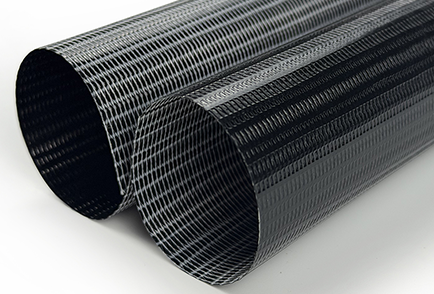
One-sided coated PVC tarpaulinPVC coating thickness directly determines waterproof performance and durability. Tarpaulins below 280 gsm usually have an excessively thin coating, leading to:

  • Reduced waterproofing: Thin coatings can develop micro-pores, causing leakage over time
  • Poor abrasion resistance: Surface wear quickly exposes the fabric base
  • Weak aging resistance: Inadequate UV protection accelerates hardening and brittleness

In practice, thin coatings cannot form a continuous protective barrier, especially after folding, welding, or prolonged tension.

2. Weak Base Fabric Limitations

To reach very low weights, manufacturers must use:

  • Lower denier yarns (e.g., 250D or below)
  • Lower fabric density
  • Reduced yarn twist strength

This results in:

  • Low tensile strength
  • Easy tearing at eyelets or seams
  • Poor dimensional stability

Even if the coating looks acceptable initially, the fabric fails first under load.

3. Welding and Seaming Problems

One of the most critical issues below 280 gsm is poor weldability.

  • Hot air welding
  • High-frequency (HF) welding
  • Heat sealing

All require sufficient PVC mass to melt and fuse properly.

Thin PVC layers:

  • Burn easily
  • Create weak seams
  • Delaminate during stress

This is why ultra-light PVC tarpaulins often cannot be reliably welded, forcing manufacturers to rely on sewing — which compromises waterproofing.

4. Extremely Short Service Life

Below 280 gsm, PVC tarpaulins typically suffer from:

  • Rapid embrittlement
  • Color fading
  • Surface cracking
  • Loss of flexibility

In outdoor conditions, such materials may last only a few months, making them unsuitable for professional or commercial use.

II. 280gsm Is the Starting Point, Not the Only Point

How the Industry Standard Was Formed

The 280 gsm minimum standard for PVC tarpaulin is the result of decades of practical validation and technological evolution. It represents a balance between material cost, manufacturing feasibility, performance reliability, and real application demands.

Typical Applications by Weight Range

  • 280–350 gsm: Short-term outdoor use, light-duty covers, temporary storage
  • 350–500 gsm: Medium- to long-term outdoor use, construction sites, moderate industrial applications
  • 500–650 gsm: Heavy-duty industrial use, long-term fixed installations, harsh climates
  • Above 650 gsm: Specialized applications, extreme weather conditions, high safety requirements

Technological Progress and Standard Evolution

Thanks to advancements in material science, modern PVC tarpaulins can offer better performance at the same gsm compared to products from a decade ago. This is due to:

  • Improved polyester fiber technology with higher strength-to-weight ratios
  • Enhanced PVC formulations with superior weather resistance and flexibility
  • More advanced production processes ensuring uniform coating and consistent quality

Despite these improvements, 280 gsm remains a critical reference point, as it represents the minimum material input required to ensure basic functional performance.

III. How to Choose? Look Beyond Just the Weight

While 280 gsm is the minimum starting point, gsm alone should never be the final decision factor.

One-sided coated PVC tarpaulin2

1. Check Base Fabric Specification

Two tarpaulins with the same gsm can perform very differently.

Always ask for:

  • Yarn denier (e.g., 500D, 1000D)
  • Fabric density (e.g., 18×18, 20×20)
  • Weaving method (plain, Panama, reinforced)

A well-designed 450 gsm tarpaulin can outperform a poorly made 550 gsm one.

2. Understand Coating Method

Different production technologies affect quality far more than weight.

  • Laminated PVC tarpaulin: lower cost, thinner coating
  • Semi-coated: improved bonding
  • Knife-coated PVC tarpaulin: thick, uniform coating, best durability

For demanding applications, knife coating matters more than gsm alone.

3. Consider the Application Environment

Ask yourself:

  • Indoor or outdoor?
  • UV exposure?
  • Temperature range?
  • Mechanical stress?
  • Chemical contact?

For example:

  • High temperature accelerates PVC aging
  • UV breaks down plasticizers
  • Oils and chemicals attack thin coatings

In harsh conditions, 280 gsm will fail regardless of price.

4. Certifications and Compliance Matter

Weight alone does not guarantee safety or compliance.

Look for:

  • REACH / RoHS compliance
  • Fire retardancy (e.g., B1 DIN 4102)
  • Anti-mold or anti-UV additives
  • Surface treatments (acrylic, PVDF)

These features often add weight — but they add real value.

IV. Rational Selection, Value First

One-sided coated PVC tarpaulin3

The 280 gsm benchmark for PVC tarpaulin is a scientifically grounded minimum standard that ensures fundamental performance. Products below this threshold may appear attractive in price, but often carry hidden risks in performance, safety, and long-term cost.

A wise purchasing strategy treats gsm as an important reference—not the sole deciding factor. By evaluating actual application needs, comprehensive performance data, manufacturing quality, and supplier reliability, buyers can select products that truly meet their requirements.

Whether protecting valuable industrial equipment or providing shelter for outdoor activities, investing in reliable PVC tarpaulin is ultimately an investment in peace of mind and long-term value. For this reason, respecting the 280 gsm minimum—and choosing higher specifications when needed—remains the most rational approach today.

As material technologies continue to evolve, lighter and stronger alternatives may emerge in the future. For now, however, 280 gsm remains a time-tested and trustworthy baseline in the PVC tarpaulin industry.

Share Thisw Story:

Table of Contents

罗仁

Ted Luo

I am Ted. I have been working in the PVC tarpaulin industry at Haining Lona Coated Material Co., Ltd. for nearly 10 years.With nearly 20 years of experience in the textile foreign trade industry. I am confident that my professional expertise and high-quality products will win your trust.

Try LonaTarp® Customize Your Tarpaulin Now

Get A Quote

Fill out the form below, and we will be in touch shortly.