

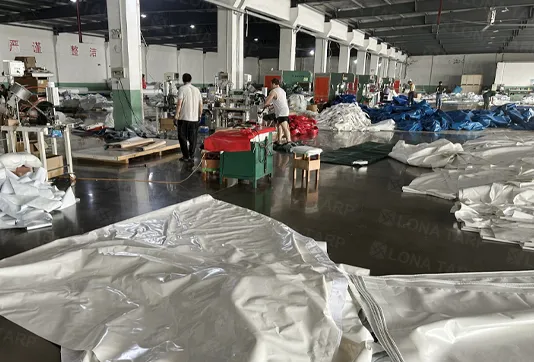
 The global functional coating fabrics market is projected to exceed $256 billion by 2027 (Global Market Insights data). Polyvinyl chloride tarpaulins, leveraging their unparalleled workability and comprehensive performance advantages, are becoming the core carrier for manufacturing, trade circulation, and engineering projects to reduce costs and enhance efficiency, and to achieve innovative breakthroughs. As a PVC vinyl tarp manufacturer with years of deep industry experience, we deeply understand the processors, distributors, and engineering contractors’ urgent demands for pushing material performance limits, improving processing efficiency, and innovating end applications. This is not only a technical challenge, it is the line of life and death for business competitiveness!
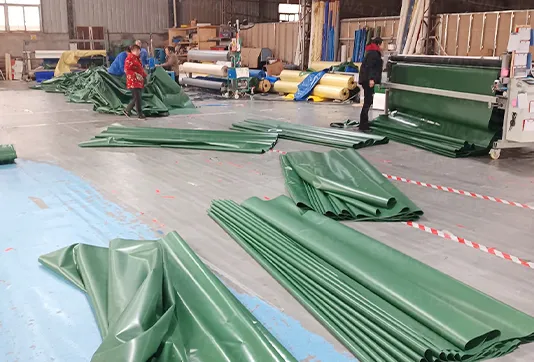
Gone are the days when polyvinyl chloride tarpaulin manufacturing meant simply cutting rectangles and stitching seams. Today, the industry thrives on processing mode diversification – a strategic expansion of techniques that unlocks unprecedented versatility, performance, and value for end-users. This evolution isn’t just a trend; it’s a response to increasingly demanding applications and a competitive necessity.
Let’s explore the diverse landscape of modern polyvinyl chloride tarpaulin processing:
II. Advanced Heavy Vinyl Tarp Cutting Technology
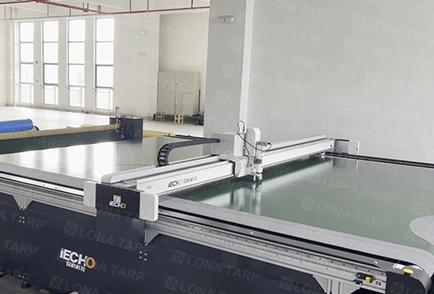 Computer Numerical Control ensures laser-sharp precision for complex shapes, curves, and intricate designs, minimizing waste and enabling custom fits far beyond basic rectangles. Ideal for vehicle covers, specialized equipment shrouds, and architectural applications.
Laser Cutting: Offers incredibly clean, fused edges, preventing fraying and unravelling of the heavy vinyl tarp. Perfect for detailed logos, ventilation patterns, mesh inserts, and high-end products where a premium finish is essential.
Ultra-Wide Format (5m+) CNC Cutting Table with AI Nesting Algorithm
Equipped with dynamic tension compensation and visual deviation correction (±0.5mm precision), this system eliminates serpentine cutting and edge wrinkling caused by manual material handling.
Case study: A container tarp manufacturer achieved a material utilization rate increase from 78% to 93%, saving over 2 million RMB annually in PVC heavy vinyl tarp roll procurement costs.
Breakthrough in Multi-Layer Precision Synchronized Cutting
Enables single-pass cutting of 12-layer high-strength polyester base fabric + PVC film, boosting efficiency 8x compared to single-layer processing—meeting urgent large-scale project demands (e.g., 10,000-unit emergency tent orders post-disaster).
3D Curved Surface Adaptive Cutting
For complex products like stadium tensile membranes and custom equipment covers, the process integrates 3D point-cloud scanning → automated pattern unfolding → laser-projection-guided cutting, reducing contour errors to <0.3% and cutting on-site rework rates by over 90%.
III. High-Strength Tarps Vinyl Welding & Seaming
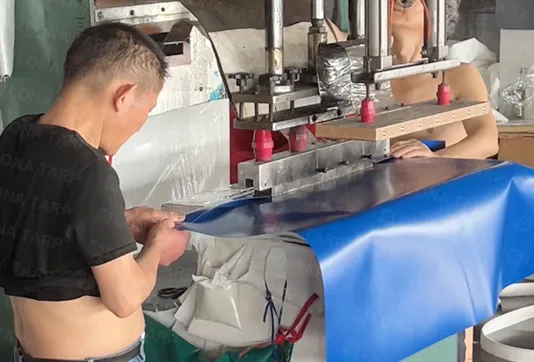 Digital High-Frequency Welding: The industry standard for creating strong, waterproof, and airtight seams by molecularly fusing PVC layers under pressure and RF energy. Essential for truck tarps, inflatables, fuel tanks, and tension structures.
Achieves weld seam strength exceeding 95% of the base material (far surpassing the industry average of 70%), making it ideal for trade distributors supplying large-scale warehouse canopies and collapsible swimming pools that demand absolute leak-proof performance, eliminating compensation risks from seepage.
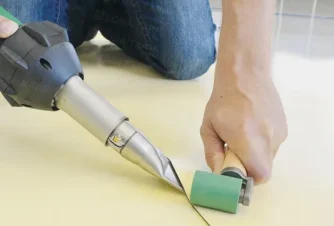
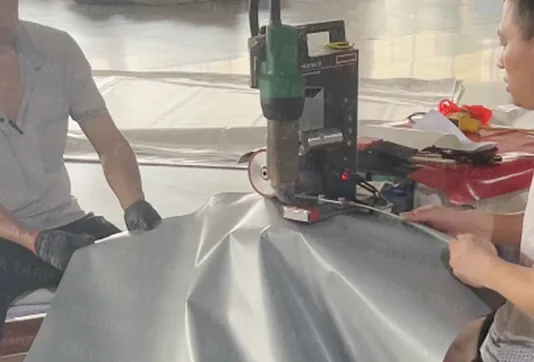 Hot-Air Welding & Reinforced Seams: Uses a stream of heated air to melt tarps vinyl edges or welding tapes together. For engineering contractors handling complex curved structures (e.g., sealing covers for large wastewater tanks), we offer wide-format hot-air welding technology and embedded reinforcement strip solutions, boosting wind resistance by 200%—drastically reducing wind damage incidents and long-term maintenance costs.

 The diversification of polyvinyl chloride tarpaulin processing is a testament to the material’s enduring relevance and adaptability. By embracing this wide array of techniques – from precision cutting and robust welding to functional coatings and digital customization – manufacturers are not just making tarps; they are engineering high-performance, application-specific solutions. Whether it’s a heavy-duty truck cover with welded seams and custom printing, a flame-retardant tent with intricate laser-cut vents, or an anti-slip industrial curtain, the possibilities are continually expanding thanks to the power of diversified processing.
