

What is UV-Resistant Tarpaulin?
What is UV-Resistant Tarpaulin? UV-Resistant Tarpaulin is the Protective Guardian for Outdoor Equipment
Ordinary tarpaulins can become brittle and fade after just a few months under the scorching sun, but specially treated tarpaulins can remain strong as new for years. The reason behind this lies in the combination of materials engineering and photochemical technology.
If a tent is continuously exposed to sunlight for two months, tiny holes will begin to appear in the polyester fibers, gradually leading to damage. Even high-quality PVC-coated tarpaulins, without UV protection treatment, will become noticeably brittle, faded, and ultimately lose their protective function within about a year.
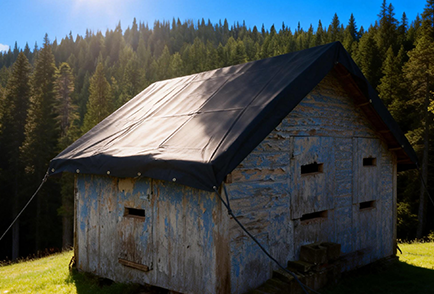
The damage caused by ultraviolet (UV) rays goes beyond making the tarpaulin look old; it initiates a series of chemical reactions at the molecular level. These reactions eventually lead to the complete failure of the tarpaulin. Tarpaulins treated with UV-resistant processes are the protective guardians for outdoor equipment.
I. The Impact of UV Rays on Tarpaulins
The impact of UV rays on tarpaulins is far more complex than the visible “weathering” we see. In reality, this impact initiates a series of chemical reactions starting at the molecular level, ultimately causing the tarpaulin to fail completely. So, how does this process occur?
Molecular Damage to Tarpaulins by UV Rays
Ultraviolet rays in sunlight possess high energy capable of breaking chemical bonds, triggering photodegradation reactions in fiber materials. For common polymer fibers like polyester and polypropylene fibers, UV rays cause molecular chain scission, leading to a decrease in the degree of polymerization and a reduction in the mechanical properties of the fibers.
Photodegradation of Polyester Base Fabric
This damage is particularly evident on polyester (PET) base fabric. Experiments show that under simulated natural light conditions, after 56 days of UV exposure, microscopic holes and fractures appear on the surface of polyester fibers, with clear signs of damage.
Simultaneously, UV exposure can also trigger oxidation reactions in fiber materials, generating new functional groups such as carbonyl and hydroxyl groups. This not only alters the chemical structure of the fibers but also causes color changes, leading to yellowing and discoloration.
Photo-oxidative Degradation of PVC Coating
For materials with a polyvinyl chloride (PVC) surface coating, the photo-oxidative degradation process is more complex. UV rays promote the dehydrochlorination reaction within the PVC molecular chains, forming conjugated double-bond structures. This is the main reason why PVC products become yellow and brittle after long-term sun exposure.
Tangible Performance Deterioration
This molecular-level damage gradually manifests in performance changes perceptible to users, typically developing along a timeline:
Stage 1: Early Signs (Weeks to Months)
- Slight color fading or yellowing; decrease in surface gloss.
- Professional testing can detect a 5-10% decrease in tensile strength, but it’s not easily noticeable to the naked eye.
Stage 2: Performance Decline (After Several Months)
- Noticeable color fading; fine cracks may appear on the surface.
- The material feels harder and more brittle; tear resistance decreases by 20-40%; waterproof performance begins to deteriorate.
Stage 3: Complete Failure (Around One Year or Sooner)
- Material becomes severely brittle, breaking with minor stress.
- Waterproof coating fails completely.
- Base fabric strength loss exceeds 50%, losing its basic functional use.
II. Irradiance in the Solar Spectrum
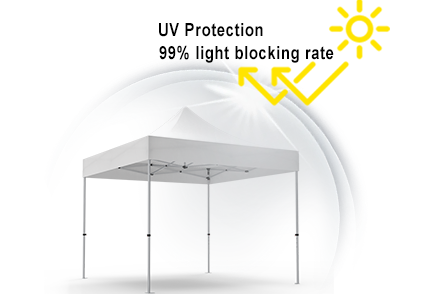
Ultraviolet rays primarily come from the sun. The spectrum emitted by the sun contains radiation of different wavelengths, including ultraviolet (UV) radiation. Based on wavelength, UV radiation can be divided into three types: UVA, UVB, and UVC. UVC, due to its shorter wavelength, is almost completely absorbed when passing through the Earth’s atmosphere, thus having minimal impact on surface life. However, UVA and part of UVB can penetrate the atmosphere and reach the ground.
Radiation Energy in Specific Regions
Irradiance in the solar spectrum refers to the solar radiation energy received per unit area. This energy exists in the form of different wavelengths, from ultraviolet to visible light to infrared, constituting a continuous spectrum. The solar irradiance measured at the Earth’s surface or in a specific region is influenced not only by the energy emitted by the sun itself but also closely related to factors such as atmospheric conditions, geographic location (latitude), seasonal changes, and the time of day.
For example, on clear, cloudless days, the irradiance received at the surface under direct sunlight is much higher than on cloudy days. Similarly, regions near the equator generally receive a higher total daily solar energy throughout the year compared to polar regions. Furthermore, Earth’s elliptical orbit around the sun and the tilt of its axis cause variations in the sun’s angle of incidence between seasons, thereby affecting the solar irradiance received at different locations on Earth.
Therefore, for a specific region, the radiation energy it receives is the result of complex variables, requiring consideration of multiple factors for accurate calculation.
The following is a table of common regional UV intensity.
Region | kLy | Region | kLy | Region | kLy |
Austria | 80 | El Salvador | 140 | Luxembourg | 80 |
Afghanistan | 180 | Ethiopia | 140 | Libya | 180 |
Alaska | 70 | Finland | 70 | Madagascar | 140 |
Algeria | 160 | France | 120 | Mali | 200 |
Angola | 120 | Germany | 80 | Malta | 160 |
Argentina | 160 | UK | 70 | Malaysia | 140 |
Australia | 180 | Greece | 120 | Morocco | 160 |
Bahamas | 140 | Guatemala | 140 | Mauritania | 180 |
Bahrain | 200 | Guyana | 120 | Mexico | 160 |
Belgium | 80 | Haiti | 160 | Mozambique | 160 |
Burma | 120 | Honduras | 140 | Nepal | 160 |
Bolivia | 140 | Hungary | 80 | Netherlands | 80 |
Brazil | 120 | India | 180 | Nicaragua | 140 |
Bulgaria | 100 | Indonesia | 140 | Niger | 200 |
Canada | 100 | Iraq | 180 | Norway | 70 |
Chad | 200 | Iran | 180 | New Zealand | 120 |
Chile | 140 | Israel | 180 | Oman | 160 |
China | 140 | Italy | 120 | Pakistan | 180 |
Colombia | 100 | Jamaica | 160 | Panama | 40 |
Costa Rica | 140 | Japan | 100 | Paraguay | 160 |
Cuba | 140 | Jordan | 180 | Peru | 140 |
Cyprus | 140 | Kenya | 140 | Philippines | 140 |
Denmark | 70 | Kuwait | 180 | Poland | 80 |
Egypt | 200 | Korea | 120 | Portugal | 40 |
Ecuador | 120 | Lebanon | 180 | Romania | 100 |
III. The Scientific Principles of UV Resistance
UV-resistant tarpaulins achieve protection through two main mechanisms: physical reflection and chemical conversion.
Physical Reflection: Surface Treatments (PVDF, Titanium Dioxide (Titanium White), Acrylic)

Physical reflection is primarily achieved through surface treatments, including PVDF coating, titanium dioxide (titanium white) addition, and acrylic treatment. Inorganic materials like titanium dioxide and zinc oxide, due to their high refractive index, can scatter UV rays, preventing their penetration.
Chemical Conversion: PVC Coating (Adding UV Absorbers and Light Stabilizers to PVC)
Chemical conversion mainly involves adding UV absorbers and light stabilizers to the PVC coating. UV absorbers are organic compounds that absorb UV radiation in the 270-400nm wavelength range. Through processes like forming stable hydrogen bonds and hydrogen bond chelation rings, they convert this energy into heat and dissipate it.
The core purpose of both mechanisms is to prevent the breaking of polymer chains, thereby resisting aging and embrittlement and maintaining strength. They also prevent the decomposition of pigment/dye molecules, thus resisting fading.
IV. The Meaning and Standards of UPF Value
What is UPF Value?
Ultraviolet Protection Factor (UPF) is the internationally recognized indicator for measuring the sun protection capability of fabrics. The UPF value represents the ratio of the average effect of UV radiation on unprotected skin to skin protected by the fabric. A higher UPF value indicates better protection.
According to the Chinese National Standard GB/T 18830-2009 “Textiles – Evaluation for Solar Ultraviolet Radiation Protective Properties,” a product can only be labeled as “UV protective product” when its UPF > 40 and its UVA transmittance is < 5%.
Key Ratings and Transmittance
The key rating classifications are as follows:
- UPF 15-24: Good protection
- UPF 25-39: Very good protection
- UPF 40-50+: Excellent protection
When UPF exceeds 50, the impact of further increasing the UPF value on human protection becomes negligible. Therefore, the highest UPF rating标识 for textiles in China is 50+.
Important Distinction: UPF vs. SPF
It’s important to note that UPF and SPF are distinctly different: UPF is a protection indicator for fabrics, while SPF is a protection indicator for sunscreen cosmetics, evaluating the ability to prevent sunburn (erythema) on the skin.
V. International Testing Standard Systems
The testing standard systems for foreign UV-resistant tarpaulins and related materials are well-established, mainly divided into two categories: protective performance testing and weather aging resistance testing.
Core Standards for UV Resistance Testing
Core standards for UV resistance testing include:
- Australia/New Zealand Standard: AS/NZS 4399:1996
- American Standards: AATCC TM183 and ASTM D6544
- European Union Standards: EN 13758-1 and EN 13758-2
- International Standard: ISO 105-B02
Key Standards for Weather Aging Resistance Testing
For industrial materials like PVC tarpaulins, long-term weather resistance testing is more indicative than initial UPF value. The most authoritative international test is xenon arc accelerated aging testing. The main standards include:
ISO 4892-2: Plastics — Methods of exposure to laboratory light sources — Part 2: Xenon-arc lamps. It simulates full-spectrum sunlight and is an internationally recognized method for weather resistance testing.
Corresponding American Standards: ASTM G155 (Standard Practice for Operating Xenon Arc Light Apparatus) and ASTM D4329 (Standard Practice for Fluorescent Ultraviolet (UV) Lamp Apparatus Exposure of Plastics). These standards typically set an irradiance intensity of 0.55 W/m² (at 340nm wavelength) and exposure times of 500-2000 hours, evaluating color change (ΔE value) and the rate of physical property decline.
VI. Practical Procurement Guide
In actual procurement, how to purchase UV-resistant tarpaulin.
First, check if the product label clearly indicates the UPF value and the corresponding standard. According to national standards, only products with UPF > 40 and UVA transmittance < 5% can be called “UV protective products.”
Secondly, for tarpaulins intended for long-term outdoor use, the initial UPF value is not the only consideration. More attention should be paid to the product’s weather resistance test report. Inquire with suppliers about whether they provide xenon arc aging test data based on standards like ISO 4892-2 or ASTM G155.
Additionally, physical structure also affects protection effectiveness. From a fiber perspective, staple fibers are better than filaments, fine fibers are better than coarse fibers, and flat or profiled fibers are better than round fibers. Generally, higher fabric density correlates with better UV protection.
Finally, selection strategies should differ for different application scenarios: tarpaulins for temporary events may focus on initial protective performance, while permanent architectural awnings must prioritize long-term weather resistance.
Choosing a PVC tarpaulin supplier impacts costs, quality, efficiency, and reputation. With the right methodology and partner, you’ll slash procurement risks, turbocharge operations, and capture more market share.
We’re ready to fuel your growth with superior products, expert service, and unwavering commitment!
Call/WhatsApp: +86-17757389172
📧 Email: sam@pvctarpaulin.com
🌐 Website: www.pvctarpaulin.com
About Us:
With 15 years in high-performance PVC tarpaulin manufacturing, we serve 200+ quality-driven partners globally. Our ISO9000-certified production lines and deep technical expertise ensure solutions that safeguard your business success.
Pro Tip: Save or share this article with your procurement, technical, or project teams. Make scientifically informed choices—starting with your next inquiry.
Share Thisw Story:
Table of Contents

Sam Tan
Hi, I’m Sam Tan, International Sales at Haining Lona Coated Materials. With 10 years of foreign trade experience in PVC tarpaulin, I have deep product knowledge. Backed by our 20+ years of factory expertise in PVC coating technology (100+ employees), I ensure reliable solutions. Let’s connect!
Try LonaTarp® Customize Your Tarpaulin Now
- PVC Formulation Properties
- Strength, Weight and Thickness
- Glossy, Matte, Color, Print and 3D Embossed Patterns
- Tarpaulin Roll Sizes and Packaging
- Cutting, Heat Sealing, Sewing, Add Eyelets, and Accessories Purchasing
