

The Application of PVC Fabric in Airdome Inflatable Tents.
Airdome inflatable tents have become one of the most effective ways to create large-span, enclosed areas as lightweight building continues to advance. Inflatable domes provide unparalleled benefits in terms of construction speed, structural flexibility, and operating efficiency as compared to conventional steel-frame or concrete structures. Sports facilities, training facilities, exhibition halls, industrial storage, transportation hubs, and emergency or temporary shelters are all using them more and more because of these advantages.
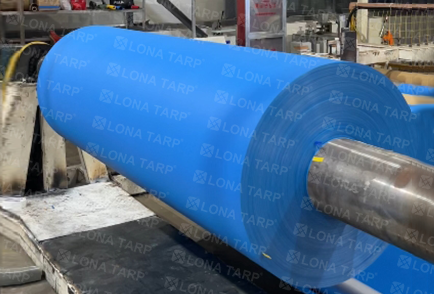
The performance of the membrane material is the key to every effective inflatable dome. PVC-coated cloth serves as the main load-bearing element of the entire construction, not just a covering layer. An inflatable dome’s capacity to function safely, effectively, and inexpensively over time is directly determined by its mechanical strength, airtightness, durability, and environmental resistance.
Airdome inflatable tents, in contrast to rigid structures, depend on a careful balancing act between internal air pressure, material tension, and external environmental pressures. Any material performance flaw might decrease service life, increase energy consumption, or jeopardize structural stability. Thus, choosing the appropriate PVC fabric is not only a matter of buying; it is a crucial technical decision.
This article offers a thorough examination of how PVC fabric facilitates the use of airdome inflatable tents, how it lowers the cost of inflatable domes, how it satisfies the rigorous specifications of inflatable dome stadiums, and how it guarantees long-term stability throughout the inflatable dome construction process. Beyond the delivery of materials, we also investigate additional value.
I. How to Optimize Your Inflatable Dome Cost?
One of airdome inflatable tents’ greatest competitive advantages is their affordability. An inflatable dome’s long-term operating performance determines its real economic worth, even if the initial expenditure is frequently less than that of traditional buildings. A thorough assessment of material quality, energy consumption, frequency of maintenance, and service life is necessary to optimize the cost of inflatable domes.
Material Thickness vs. Long-Term Cost
One of airdome inflatable tents’ greatest competitive advantages is their affordability. An inflatable dome’s long-term operating performance determines its real economic worth, even if the initial expenditure is frequently less than that of traditional buildings. A thorough assessment of material quality, energy consumption, frequency of maintenance, and service life is necessary to optimize the cost of inflatable domes.
PVC-coated fabric comes in a variety of weights and thicknesses, usually measured in millimeters or GSM. Thinner materials may be less expensive initially, but since they age more quickly, distort more, or require more repairs, they frequently result in greater lifespan costs.
When building a permanent or semi-permanent inflatable dome, choosing the right fabric thickness helps guarantee:
- Continuous operation with stable pressure retention
- Resistance to snow loads and wind uplift
- Decreased concentration of stress at welded seams
From a lifecycle standpoint, a slightly greater material investment frequently lowers the total cost of an inflatable dome by increasing service life and decreasing downtime.
Fabric Performance Reduces Operational Expenses
Because blowers must constantly maintain interior air pressure, energy consumption is a significant operating cost for airdome inflatable tents. Air leakage is greatly reduced using high-quality PVC fabric with low air permeability, enabling the system to run with a lower blower power.
Superior tensile strength and UV resistance also reduce material aging and fatigue, which lowers the need for inspections, repairs, and replacements. These performance benefits immediately result in decreased overall inflatable dome costs over the course of years of operation.
Standardization and Customization Efficiency
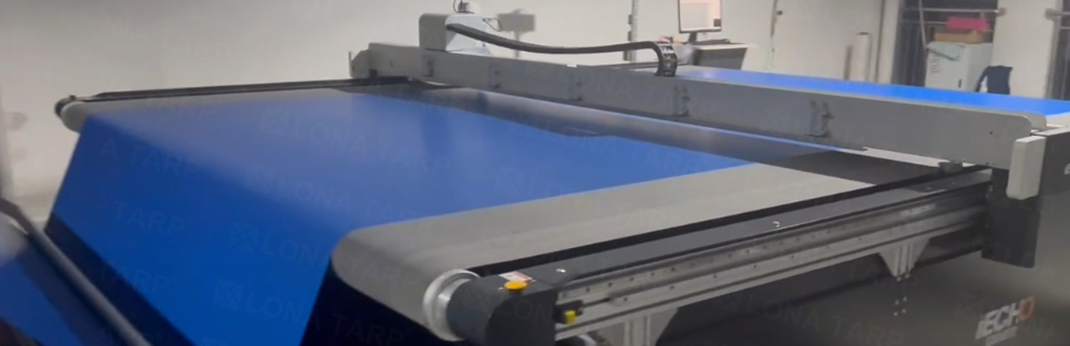
PVC textiles made for industrial processing are advantageous for the building of modern inflatable domes. Manufacturers may reduce material waste and increase precision and repeatability by integrating automated cutting, digital patterning, and high-frequency welding.
Large installations, like inflatable dome stadiums, may achieve both cost effectiveness and customized performance because to this balance between conventional standards and project-specific customization.
II. How Does PVC Fabric Meet the Stringent Demands of Inflatable Dome Stadiums?
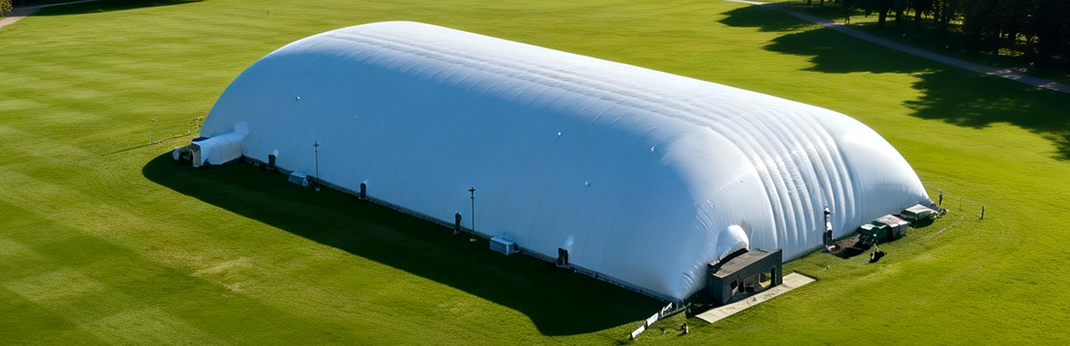
Inflatable dome stadiums are the most demanding use case of all inflatable applications. These structures must securely accommodate large crowds, operate continuously, and adhere to strict building and fire safety codes.
Structural Strength for Large-Span Coverage
High-tenacity polyester base cloth, which has exceptional tensile strength in both warp and weft directions, is designed into PVC fabric used in inflatable dome stadiums. Under continuous internal pressure, controlled elongation guarantees that the membrane retains its intended shape.
For large-span inflatable dome construction, where even little material deformation might compromise overall stability and safety, this structural dependability is crucial.
Fire Retardancy and Safety Compliance
Stadiums with inflated domes that are used by the public must have enhanced fire-retardant capabilities. Without sacrificing mechanical strength, PVC-coated textiles may be designed to satisfy global standards such as DIN 4102 B1, EN 13501, and NFPA 701.
In addition to improving safety, fire-retardant PVC fabric makes airdome inflatable tent project approval, insurance coverage, and long-term operation easier.
Weather Resistance and Environmental Durability
Throughout their useful lives, outdoor inflatable domes are subjected to wind, snow, rain, UV radiation, and temperature changes. To stop cracking, discoloration, and strength loss, advanced PVC coatings include UV stabilizers, antifungal compounds, and weather-resistant formulas.
Because of their durability, inflatable dome stadiums can function consistently in a variety of operational environments and climates.
Acoustic and Visual Performance
Material performance in stadium settings goes beyond structural needs. PVC fabric may be designed to improve acoustic behavior, decrease glare, and increase light dispersion, making airdome inflated tents more pleasant for athletes, spectators, and event planners.
III. How to Ensure the Stability of an Inflatable Dome Construction?
The key to building an inflatable dome successfully is stability. Inflatable domes, in contrast to rigid structures, depend on ongoing interactions between external stresses, membrane tension, and air pressure. PVC fabric is essential to preserving this equilibrium.
Airtightness and Pressure Retention
Excellent airtightness is provided by premium PVC-coated fabric, which enables airdome inflatable tents to sustain steady internal pressure with minimal energy consumption. Uniform stress distribution across the membrane is ensured by constant pressure, which also reduces structural fatigue.
Seam Strength and Welding Compatibility
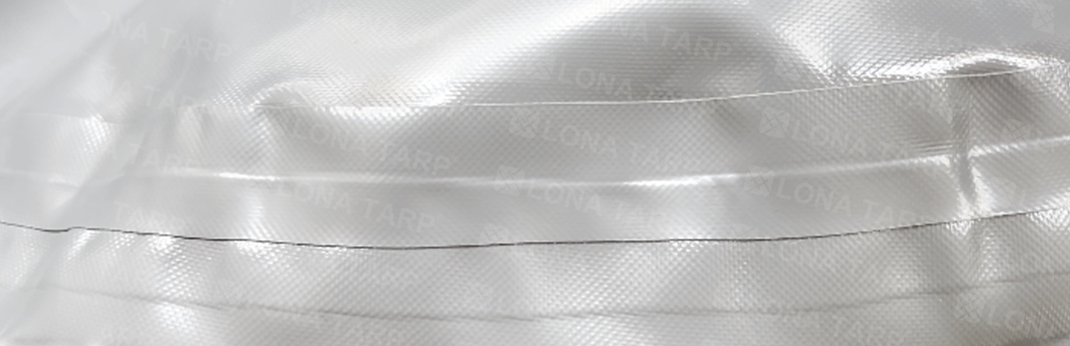
High-frequency welding works best with PVC fabric, resulting in seams that are as strong as or stronger than the underlying material. In huge inflatable dome stadiums, strong seams are essential, where a seam failure might jeopardize the entire construction.
Load Distribution and Shape Retention
PVC fabric’s controlled elasticity allows it to temporarily distort to absorb wind and snow loads before regaining its original shape when the load is released. The long-term durability of inflatable dome construction depends on this flexibility.
Monitoring and Maintenance Advantages
Smooth PVC-coated surfaces make maintenance and inspection easier. The operating lifespan of airdome inflatable tents may be increased and unplanned downtime can be minimized with effective damage detection, cleaning, and targeted repairs.
IV. Value Beyond Supply
Airdome inflatable tents are made of PVC fabric, however the long-term success of the project is largely dependent on the knowledge and dependability of the provider.
Technical Support and Specification Guidance
For inflatable dome stadiums, a skilled PVC fabric supplier can aid with material selection, performance optimization, and regulatory compliance, assisting customers in balancing optimal inflatable dome cost with safety standards.
Quality Consistency and Risk Reduction
Construction of large-scale inflatable domes necessitates uniform material quality across production batches. Reliable suppliers lower the risks associated with fabrication and installation by ensuring verifiable quality control, stable formulas, and compliance with international standards.
Long-Term Partnership and Lifecycle Value
Strong partnerships maximize long-term performance and return on investment by providing ongoing technical support, upgrade planning, and material optimization throughout the lifespan of airdome inflatable tents.
Share Thisw Story:
Table of Contents

Lynn Chen
I’m Lynn from Haining Lona Coated Material Co. For years, I’ve been helping customers find the right PVC coated fabric and related products for their projects. Whether it’s for inflatables, tents, or industrial covers, I’m here to share ideas, answer questions, and make sure you get the right solution. Feel free to reach out — I’m always happy to talk.
Try LonaTarp® Customize Your Tarpaulin Now
- PVC Formulation Properties
- Strength, Weight and Thickness
- Glossy, Matte, Color, Print and 3D Embossed Patterns
- Tarpaulin Roll Sizes and Packaging
- Cutting, Heat Sealing, Sewing, Add Eyelets, and Accessories Purchasing
