

What is Pneumatic Architecture?
Pneumatic architecture, also known as air-supported or inflatable structures, represents an innovative branch of building design that leverages internal air pressure to maintain structural shape and integrity—departing from the rigid steel, concrete, or wooden frameworks of traditional construction. This transformative technology creates lightweight, versatile, and cost-effective spaces, redefining the boundaries of modern architecture across industries. From large-scale stadium domes and industrial warehouses to temporary event venues and emergency shelters, pneumatic structures offer unparalleled flexibility, rapid deployment, and adaptability, making them a preferred choice for both semi-permanent and temporary spatial needs.
I. Composition and Principles of Pneumatic Membrane Structures
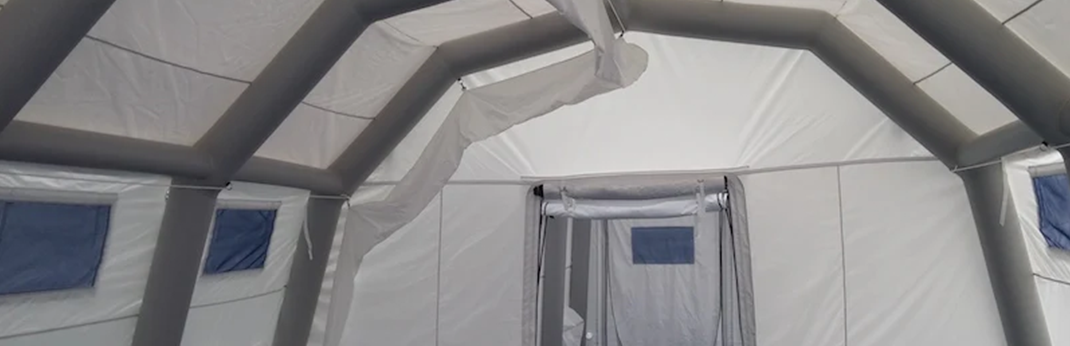
The functionality of pneumatic membrane structures hinges on the synergy of five key components, working in tandem to ensure stability, airtightness, and resilience against environmental forces:
- Structural Membrane: Serving as the “skin” of the structure, this flexible yet robust layer is engineered to withstand tensile forces, UV radiation, extreme temperatures, and moisture. Common materials include PVC-coated polyester, PTFE (Polytetrafluoroethylene) -coated fiberglass, and ETFE (ethylene-tetrafluoroethylene) foil. Among these, PVC tarpaulin (polyvinyl chloride-coated polyester) stands out for its optimal balance of durability, flexibility, and cost-efficiency, making it the material of choice for most mid-to-large scale semi-permanent projects.
- Air-Lock & Supply System: Critical for preserving internal pressure, the air-lock system (featuring revolving doors or pressurized vestibules) minimizes air loss during human and equipment movement. Complementing this, the air supply system—comprising blowers (electric or diesel-powered) and backup generators—continuously injects air to maintain positive internal pressure, with generators preventing catastrophic deflation in case of primary power failure.
- Foundation & Anchoring Mechanism: A continuous perimeter anchor (concrete edge rails, steel cables, or ground screws) secures the membrane to the ground, counteracting wind uplift and external loads. This anchorage, combined with the downward force from internal pressure, ensures the structure remains stable even in adverse weather.
- Control & Monitoring System: Equipped with pressure sensors and automated controllers, this system acts as the “nerve center” of the structure. It monitors internal pressure in real-time (typically 50 to 500 Pascals above atmospheric pressure) and adjusts blower output to compensate for leakage, wind, or snow loads, safeguarding structural integrity.
- Climate Control Integration: Modern pneumatic structures integrate heating, cooling, and ventilation systems, enabling year-round comfort and protecting the membrane from humidity-related damage.
At its core, pneumatic architecture operates on the principle of positive internal pressurization. By creating a slight pressure differential between the interior and exterior, the membrane is placed in uniform tension, gaining rigidity to span large distances without internal columns. This principle eliminates the need for heavy framing, resulting in structures up to 90% lighter than traditional buildings of the same size— a game-changer for large-span applications.
II. How Do Pneumatic Structure System Work?
The operation of a pneumatic structure is a continuous, automated process focused on maintaining pressure balance and structural stability, unfolding in four key phases:
- Inflation & Deployment: The deflated membrane is laid over the prepared foundation and anchored securely. Blowers are activated to gradually inflate the structure, with the control system regulating blower speed to avoid sudden stress on the membrane. Inflation is complete once the design shape and operational pressure are achieved.
- Steady-State Pressure Maintenance: Since most membranes are not fully airtight, blowers run intermittently to replenish air lost through leakage, air-lock use, and fabric permeability. Sensors send real-time data to the controller, which activates or deactivates blowers as needed to sustain consistent pressure.
- Dynamic Load Resistance: External forces like wind and snow are countered by the system’s adaptive pressure adjustments. For example, a wind gust triggers a temporary pressure increase to stiffen the membrane, while snow load causes slight membrane deflection—reducing interior volume and naturally boosting pressure to shed snow and prevent overload.
- Deflation & Portability: When no longer needed, blowers are turned off, and exhaust valves are opened to deflate the structure. The membrane is then folded, stored, and transported—offering unmatched mobility for seasonal facilities, touring events, or disaster relief scenarios.
III. Pneumatic Tents: Redefining Semi-Permanent Architecture
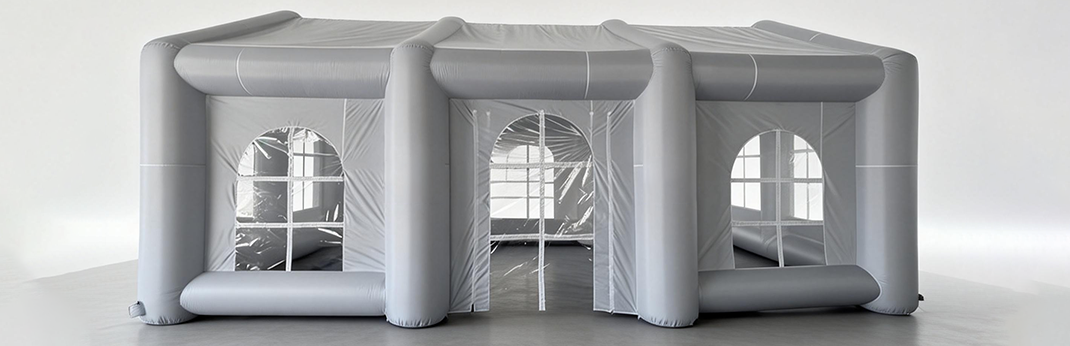
Pneumatic tents represent a revolutionary fusion of temporary shelter flexibility and permanent structure durability. Unlike pole-supported tents, they rely solely on air pressure to create vast, unobstructed interiors—making them ideal for events, military barracks, construction site offices, disaster relief shelters, and industrial storage.
Key advantages of pneumatic tents include:
- Rapid Deployment: A 2-4 person team can set up a medium-sized tent in 1-2 hours, compared to days or weeks for traditional buildings—critical for time-sensitive projects like emergency response.
- Cost-Effectiveness: Lower material, labor, and foundation costs, paired with minimal maintenance requirements, make them a budget-friendly alternative to brick-and-mortar structures.
- Spatial Efficiency: Column-free designs maximize usable space, while translucent membranes (common in PVC tarpaulin) flood interiors with natural light—enhancing comfort for events, sports, or logistics.
- Adaptability: Easily relocated and reconfigured, they suit seasonal needs (e.g., winter tennis bubbles) and growing enterprises, offering a sustainable, non-fixed asset.
IV. The Application of PVC Tarpaulin in Pneumatic Architecture
PVC tarpaulin is the backbone of most pneumatic structures, particularly semi-permanent ones, due to its unbeatable combination of performance, versatility, and cost-efficiency. Its dominance in the field stems from the following key properties:
- High Strength-to-Weight Ratio: The polyester scrim provides exceptional tensile strength to resist outward pressure, while the PVC coating adds durability and environmental protection—ensuring the membrane withstands harsh conditions without excessive weight.
- Superior Weather Resistance: Treated for UV stability, mildew resistance, and waterproofing, high-quality PVC tarpaulin endures extreme temperatures, heavy rain, and strong winds—delivering a service life of 15-20 years with proper maintenance.
- Weldability & Airtightness: PVC membranes can be hot-air welded into seamless panels, minimizing air leakage and reducing the workload on blowers. This feature is critical for maintaining consistent internal pressure.
- Customizability: Available in various thicknesses (0.5mm to 1.5mm), colors, and translucency levels, PVC tarpaulin can be tailored to project needs—from opaque industrial domes to translucent event tents. Fire-retardant treatments are also standard for safety compliance.
- Cost Efficiency: Compared to premium materials like PTFE-coated fiberglass or ETFE foil, PVC tarpaulin is significantly more affordable, making pneumatic architecture accessible to a wider range of users.
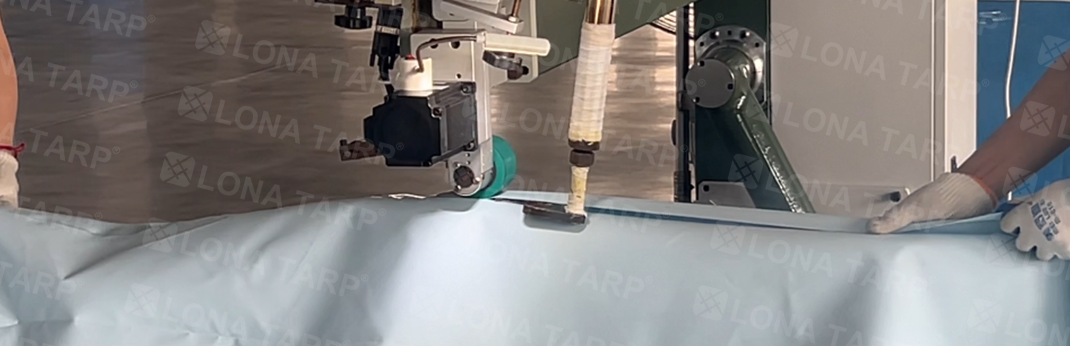
In application, PVC tarpaulin panels are precision-patterned, cut, and welded to form the complete structural envelope. Its versatility makes it indispensable for diverse use cases, including temporary event domes, military shelters, industrial storage facilities, and disaster relief tents.
IV. The Future of Pneumatic Architecture
As material science and smart technology advance, pneumatic architecture—powered by reliable materials like PVC tarpaulin—continues to expand its footprint. Innovations in remote monitoring, energy-efficient blowers, and recyclable PVC formulations are making these structures more sustainable, safe, and adaptable. From urban event spaces to remote disaster zones, pneumatic architecture offers a flexible, cost-effective solution that reimagines how we design and use built environments.
Share Thisw Story:
Table of Contents

Will He
I am Will from Haining Lona Coated Material co., Ltd, with 15 years of foreign trade experience. Applying my PVC tarpaulin expertise, I can help you find the most suitable coated fabric for your projects. Backed by our 20+ years factory in tarpaulin technology, we ensure reliable solutions!
Try LonaTarp® Customize Your Tarpaulin Now
- PVC Formulation Properties
- Strength, Weight and Thickness
- Glossy, Matte, Color, Print and 3D Embossed Patterns
- Tarpaulin Roll Sizes and Packaging
- Cutting, Heat Sealing, Sewing, Add Eyelets, and Accessories Purchasing
