

What is a Blackout Tarpaulin?
When people hear the word “blackout tarpaulin”, they often think of ordinary rainbows or camping tents. However, modern professional shading awing fabric has developed into a high-tech product that integrates materials science, textile engineering and optical technology. They are no longer just simple tools to block sunlight, but key materials that can accurately control the lighting environment and create specific working conditions for multiple industries.
I. What is a Professional Blackout Tarpaulin?

Professional blackout tarpaulin is a functional industrial and civil textile manufactured using special materials and coating technology. Its core design purpose is to effectively block, absorb or reflect external light to achieve a specific light blocking ratio. Unlike ordinary sunshade materials, professional blackou tarp follow strict technical standards in terms of shading performance, durability and environmental adaptability.
Depending on its structure and application scenarios, the shading rate of high-quality professional light-blocking tarpaulin can reach 90%-99%, or even close to complete shading (high-end products can reach 99.99%). In addition to shading capabilities, they often have comprehensive performance advantages such as water resistance, ultraviolet resistance, tear resistance and long-term weather resistance.
II. Which Fields Urgently Require Professional Blackout Tarpaulin
Professional shading tarpaulin plays an irreplaceable role in all areas where precise control or isolation of light is required. The following are the core industries in high demand:
2-1 Manufacturing and warehousing logistics
Modern manufacturing has put forward strict requirements on the lighting environment. For example, processes such as the production of photosensitive materials and the assembly of precision instruments require complete darkness or specific spectral conditions. In the warehousing and logistics field, sun-blocking tarpaulins are widely used to protect light-sensitive goods, including chemicals, pharmaceuticals and food, from degradation, reduced efficacy or quality damage caused by sunlight exposure. In addition, they help control internal temperatures in factories, workshops and logistics warehouses, build temporary partitions, and protect machinery and equipment from environmental wear.
2-2 Modern agriculture and professional breeding
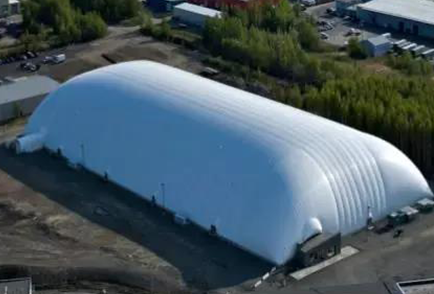
In agriculture, blackout vinyl tarpaulin enables precise light control, not just complete darkness. Typical applications include greenhouse shading to regulate plant growth cycles, creating complete darkness for mushroom cultivation, protecting seedlings from excessive light, and regulating the light cycle in animal husbandry and aquaculture. In the field of professional breeding, they can also provide a suitable living environment for certain light-sensitive animals (such as certain fur animals and reptiles).
2-3 Movies, entertainment and events
In film production and event construction, blackout tarpaulin is an important tool for light management. They are used to build temporary dark rooms, control ambient light at shooting sites to ensure consistent visual effects, block lighting equipment, and quickly create shaded background areas or equipment storage areas during large performances. In addition, they also provide temporary light protection for equipment during astronomical observation activities.
2-4 Environmental engineering and public facilities
Environmental engineering projects use a large number of light-blocking tarpaulins with high durability, chemical corrosion resistance and long-term outdoor performance. Common applications include landfill coverings (used to control odors and prevent pollution) and sewage treatment facility coverings. In public facilities such as sports venues and parking lots, they are used to create comfortable shade environments while reducing energy consumption.
2-5 Temporary buildings and special use spaces
Blackout Coated Fabric are widely used in temporary buildings such as temporary warehouses, emergency shelters, field hospitals and mobile workshops. They help with shading, temperature control and privacy protection in these spaces. In addition, professional experimental environments such as scientific research darkrooms rely heavily on high-performance light-blocking materials to maintain precise light-free conditions.
III. Analysis of the Structure and Materials of the Blackout Tarp
The ultra-high shading performance of professional blackout tarpaulin (more than 99%) is mainly achieved through the design of three-layer or multi-layer composite structures and the selection of high-quality materials. Each layer has specific functions:
- Outer layer: Usually made of high-density polyester fiber or glass fiber fabric, this layer provides structural support and is weatherproof, UV resistance and waterproof. It is the first line of defense against external light. Natural environmental factors such as sunshine, rain and wind.
- Middle layer: This is the core functional layer that determines the shading effect. It consists of a high-density substrate or a dedicated black coating/film that blocks light from penetrating through absorption and reflection mechanisms. Advanced technology even uses multi-layer microstructure coatings to selectively block light of different wavelengths to meet specific application needs.
- Inner layer: Designed to enhance shading performance and improve the surface uniformity and durability of the tarpaulin. Depending on the application scenario, functional coatings can also be added to achieve fire, mildew or antibacterial properties.
IV. How to Measure a Blackout Tarpaulin
Although shading rate is the core performance indicator of balckout tarp, professional buyers need to consider a series of comprehensive indicators to ensure that the product meets their actual needs. Key evaluation criteria include:
- Opacity and stability: In addition to nominal values, attention should also be paid to coating uniformity, fabric density and the presence of pinholes. More importantly, evaluate its long-term performance stability under extreme conditions such as strong light and high temperature.
- Spectral selectivity: Different applications require blocking of specific wavelength ranges (e.g. UV, visible, IR). For example, agricultural applications may need to block ultraviolet light while allowing certain visible wavelengths to pass through, while dark rooms need to block all visible light.
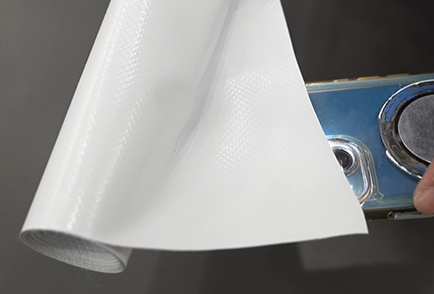
- Durability: Key indicators include tear resistance, tensile strength, weather resistance (rain, wind, snow and extreme temperatures) and service life.
- Safety: Check fire rating, environmental certification (to ensure that no hazardous substances are contained) and chemical stability (especially for chemical or environmental engineering applications).
- Functionality: Depending on the usage scenario, additional functions such as waterproof, heat insulation, sound insulation or antistatic functions need to be considered.
- Installation performance: Factors such as weight, flexibility, and ease of connection (e.g., grommet spacing, compatibility with fasteners) can affect the efficiency of installation and use.
V. Two Common “Misunderstandings” in Purchasing
When purchasing professional tarpaulin, many buyers will fall into some misunderstandings, leading to wrong purchasing decisions. Here are two common misunderstandings and corresponding professional advice:
Myth 1: Dark shades are better
Color itself does not determine the shading effect. The fundamental factors affecting shading performance are material density and coating integrity, not color depth. Poor-quality dark tarpaulin may have tiny pinholes that are invisible to the naked eye or uneven coating, resulting in local light leakage and insufficient overall shading rate. In professional tests, the performance of some light-colored professional light-blocking fabrics is even better than ordinary dark fabrics.
Professional advice: Request third-party test reports from suppliers, focusing on test methods and actual shading rate results, rather than just making judgments based on appearance color.
Myth 2: Focus only on price and ignore total cost of ownership
Low-priced tarpaulin often means reduced raw material quality and simplified production processes, which can lead to a series of problems: short service life (deterioration or cracking after one or two quarters and requires frequent replacement), unstable performance (shading effect drops rapidly over time), safety hazards (does not meet fire safety standards or contains hazardous substances) and high maintenance costs (fragile, resulting in increased repair and replacement costs).
Professional advice: Adopt a “full life cycle cost” assessment method. Select the most cost-effective product by comprehensively considering initial purchase costs, installation costs, expected service life, maintenance costs and final disposal costs.
VI. Professional Purchasing Guide
In order to select a professional light-blocking tarpaulin that suits your specific needs, follow the following steps:
- Clarify requirements: Accurately specify the required shading rate, size, thickness, applicable environmental conditions (e.g., outdoor exposure time, temperature range), and specific use scenarios (e.g., greenhouse shading, landfill coverage).
- Verify supplier qualifications: Ask suppliers for product test reports, industry certifications (e.g., environmental certification, fire safety certification), and case studies of successful applications in similar industries to assess their professional capabilities.
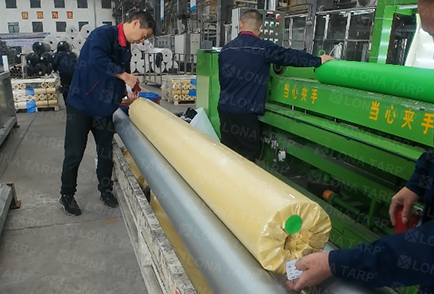
- Conduct sample testing: Obtain product samples and conduct field testing, especially under simulated actual use conditions (e.g., testing for shading performance under direct sunlight and testing for waterproofing under spray water) to verify performance claims.
- Order product samples and conduct on-site testing, especially under simulated actual use conditions (e.g., testing for shading performance under direct sunlight and testing for waterproofing performance under spray water) to verify performance claims.
- Focus on value-added services: Understand the supplier’s customization capabilities (e.g., customized size, additional functional coatings), technical support (e.g., on-site installation guidance), and after-sales services (e.g., warranty terms, repair services) to ensure a smooth user experience.
- Clarify contract details: Clearly define technical specifications, acceptance criteria (e.g., shading rate test criteria), warranty terms and after-sales responsibilities in the contract to avoid disputes.
Professional blackout tarpaulin is the perfect combination of advanced technology and industry needs, and plays a vital role in many fields such as modern manufacturing, agriculture, and environmental protection. They have evolved from simple “shading tools” to indispensable “light environment builders” that can solve practical problems, improve operational efficiency, ensure product safety, and create long-term value for enterprises.
During the procurement process, breaking preconceived concepts (such as thinking that dark colors are equivalent to better performance) and making decisions based on scientific test data and practical application requirements are the key to maximizing the value of professional light-blocking tarpaulin. As the demand for more precise light control continues to grow in various industries, light-blocking tarpaulin technology will continue to innovate, bringing more efficient and reliable solutions to various fields.
Share Thisw Story:
Table of Contents

Will He
I am Will from Haining Lona Coated Material co., Ltd, with 15 years of foreign trade experience. Applying my PVC tarpaulin expertise, I can help you find the most suitable coated fabric for your projects. Backed by our 20+ years factory in tarpaulin technology, we ensure reliable solutions!
Try LonaTarp® Customize Your Tarpaulin Now
- PVC Formulation Properties
- Strength, Weight and Thickness
- Glossy, Matte, Color, Print and 3D Embossed Patterns
- Tarpaulin Roll Sizes and Packaging
- Cutting, Heat Sealing, Sewing, Add Eyelets, and Accessories Purchasing
