

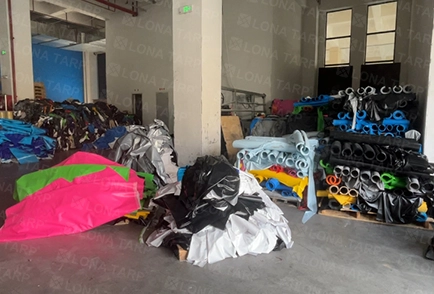
 In an age increasingly defined by environmental consciousness and sustainable practices, a critical question arises for industries and consumers alike: Is tarpaulin recyclable? As one of the most widely used protective materials across sectors such as logistics, construction, agriculture, and event management, tarpaulin—particularly PVC-based variants—plays an essential role in modern operations. Yet with growing emphasis on circular economy principles and eco-friendly material management, understanding the end-of-life options for these durable products has never been more important.
Whether you are a manufacturer committed to sustainable production, a distributor promoting green products, or an end-user making environmentally responsible choices, this resource offers clarity and guidance. Together, we can turn waste into worth and help build a more sustainable future—one tarp at a time.
I. Environmental Challenges of Traditional Tarpaulin Sheet.
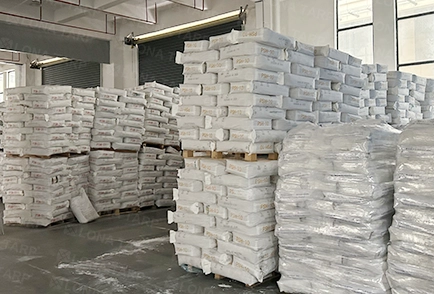 For decades, PVC (polyvinyl chloride) has been the dominant material in tarpaulin sheet manufacturing, valued for its exceptional durability, waterproof performance, and cost-effectiveness. However, despite these functional benefits, the environmental impact of traditional PVC has attracted significant criticism and remains a widely discussed issue within the industry.
A primary concern is that conventional PVC tarpaulins are not biodegradable, meaning they can persist in landfills or natural environments for hundreds of years. Additionally, the material’s complex chemical structure—often enhanced with plasticizers, stabilizers, and other additives—makes the recycling process particularly challenging. Unlike more straightforward thermoplastics, PVC requires specialized handling and separation techniques, which are not always accessible or economically viable on a large scale.
These limitations highlight a critical gap between performance and sustainability, pushing manufacturers, regulators, and consumers to seek more eco-friendly alternatives and innovate within circular economy models. As global emphasis on green manufacturing and corporate sustainability grows, understanding these environmental trade-offs becomes essential for making informed purchasing and disposal decisions.
II.Technological Breakthroughs: Vinyl Coated Polyester Tarp Recycling Is No Longer a Myth
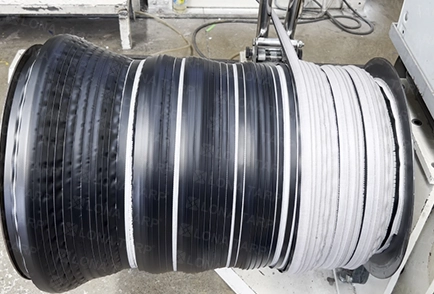 Long considered a major sustainability challenge, vinyl coated polyester tarp recycling has now entered a new era thanks to significant technological advancements. These innovations are transforming what was once an environmental burden into a valuable resource, supporting the transition toward a circular economy and green manufacturing.
2.1. Advanced Separation Technology
Modern solvent-based separation systems can effectively isolate and remove plasticizers, stabilizers, colorants, and other additives from used vinyl coated polyester tarps. The result is a high-purity PVC resin ready to be reintroduced into the manufacturing process. This closed-loop approach not only reduces waste but also decreases dependency on virgin materials, offering a more sustainable production model.
2.2. Innovations in Mechanical Recycling
New-generation mechanical recycling processes utilize techniques such as cryogenic grinding and precision sieving to break down heavy duty vinyl tarps without compromising the polymer’s structural integrity. The output—high-quality recycled PVC granules—delivers performance nearly matching that of virgin PVC, making it suitable for demanding applications while supporting resource conservation and waste reduction.
2.3. Breakthroughs in Chemical Recycling
Cutting-edge chemical recycling technology decomposes PVC waste into its fundamental chemical building blocks through processes such as pyrolysis or hydrolysis. These components are then purified and repolymerized into new PVC material that is virtually indistinguishable from first-use resin. This revolutionary method enables true molecular-level recycling, paving the way for zero-waste tarpaulin production and aligning with global carbon neutrality goals.
Together, these technologies are reshaping the lifecycle of vinyl coated polyester tarps, offering scalable, eco-conscious solutions without compromising on quality or functionality.
III. How We Transform Technology into Heavy Duty Waterproof Vinyl Tarps Products
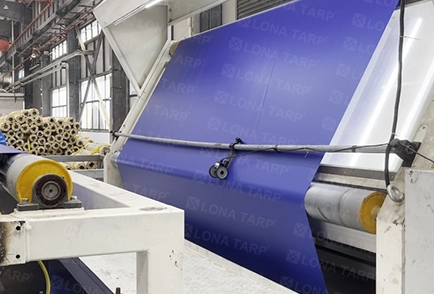 At the heart of our manufacturing philosophy lies a commitment to turning innovation into tangible, eco-conscious products. By integrating cutting-edge recycling technologies into our production lines, we deliver high-performance heavy duty waterproof vinyl tarps that align with modern environmental standards without compromising quality or functionality.
- High-Performance Recycled Tarpaulin Series:
We now offer tarpaulins incorporating 30%-50% recycled PVC content, rigorously tested to match the durability, waterproofness, and tear resistance of conventional products. These eco-friendly tarps are designed for applications ranging from agriculture and construction to logistics, providing customers with a sustainable alternative that performs on par with virgin material products. - Closed-Loop Recycling System:
We have established a take-back program that allows customers to return end-of-life heavy duty waterproof vinyl tarps. These materials are then processed through our advanced recycling pipeline. In return, participants receive discounts on future purchases, creating a circular model that promotes resource efficiency and waste reduction. - Design for Recyclability:
To further support end-of-life recovery, we have developed easily disassembled and separable tarpaulin designs. By minimizing mixed materials and using compatible components, we ensure that our products are not only durable in use but also fully recyclable after their service life, paving the way for greener disposal and material reuse.
Through these initiatives, we provide our clients with sustainable procurement options, reduce environmental impact, and foster long-term partnerships centered on innovation and responsibility.
IV. No Compromise on Quality: Exceptional Performance of Recycled PVC Tarpaulins
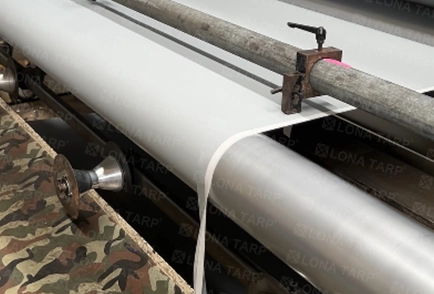 We understand that choosing sustainable materials should never mean sacrificing performance. A common concern is whether recycled content affects product quality—but our rigorous testing and real-world applications consistently demonstrate that our eco-friendly tarpaulins deliver the same reliability and durability as traditional options. In fact, they are engineered to meet—and often exceed—industry benchmarks.
Durability:
Our recycled PVC tarpaulins boast a service life of 5–8 years, matching the longevity of conventional products. Thanks to advanced material reformulation and UV stabilization technology, they resist aging, abrasion, and degradation even under prolonged outdoor exposure.Waterproofness:
These tarps deliver 100% waterproof performance, capable of withstanding hydrostatic pressure levels equivalent to those of virgin PVC tarps. Whether used in construction, agriculture, or logistics, they ensure complete protection against rain and moisture.Strength & Tear Resistance:
The tear strength, puncture resistance, and tensile properties of our recycled tarps comply with international industry standards. Reinforced fabric structures and optimized coating formulas ensure dependable performance in demanding environments.
By choosing our recycled PVC tarpaulin series, you invest in products that combine sustainability with high performance, supporting both your operational needs and environmental goals.
