In PVC tarpaulin production, paste PVC resin is the fundamental element determining the core performance and quality of the final product. It directly establishes the foundation for key properties of the heavy duty PVC tarpaulin material, including toughness, abrasion resistance, weather resistance, stability, and heat-sealing performance.
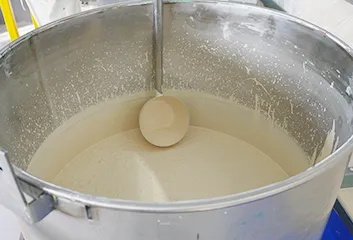 Beyond this, additives such as plasticizers, stabilizers, fillers, and pigments serve to “modify” and “supplement” the liquid PVC resin. They are used to adjust properties like flexibility, weather resistance, aging resistance, flame retardancy, color, and cost control. While these additives are also crucial for the final performance, their effects operate on top of the foundation established by the PVC resin.
Therefore, selecting high-quality PVC plastic resin is the critical first step in producing high-performance, highly durable, long-life PVC waterproof tarpaulins. Low-quality PVC resin, even when paired with the best additives, cannot meet the performance requirements of high quality pvc tarpaulins.
Plasticizers (such as phthalates and epoxidized soybean oil) can reduce the glass transition temperature (Tg) of PVC resin and improve flexibility. However, excessive plasticizers will cause the coating to migrate and precipitate, affecting long-term stability. Reasonable scientific ratio principle: Determine the critical concentration of plasticizers through dynamic thermomechanical analysis (DMA) to achieve “toughening without sacrificing strength”.
Taking high weather-resistant industrial tarpaulin as an example, its coating usually contains 50%-65% PVC resin to provide a basic waterproof membrane, 20%-35% environmentally friendly plasticizer (such as DINCH) to ensure low-temperature flexibility at -30℃, and 2% hindered amine light stabilizer (HALS) is added to make the UV resistance level reach level 8 (QUV 3000 hours strength retention> 80%). The thickness control of 0.3mm±0.02mm is achieved through the reverse roll coating process, the PVDF surface coating achieves 20 years of UV resistance, and the hydrostatic pressure exceeds 5000mm (far exceeding the ISO 811 standard). In extreme scenarios, the flame-retardant coating is filled with 15% aluminum hydroxide (ATH), passed EN 13501 B1 certification, forms an expanded carbon layer when exposed to open flames, and the limiting oxygen index (LOI) is increased to 32%.
I. What is PVC Resin
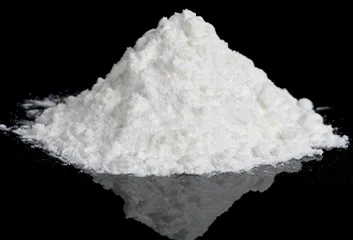 PVC resin (polyvinyl chloride resin) is a crucial synthetic plastic material. Its full name is polyvinyl chloride. It is a high molecular polymer formed by the polymerization reaction of vinyl chloride monomer (VCM), with its molecular structure simply represented as [-CH₂-CHCl-]n. It is a white or pale yellow powdery solid.
Polyvinyl chloride PVC resin is the fundamental raw material for manufacturing all PVC products, including tarpaulins. It cannot be used directly and must be processed (mixed with various additives and heated for plasticizing) to form the common PVC products we see. Resin for PVC has a high chlorine content (~57%), making PVC inherently self-extinguishing and an excellent flame-retardant material. It exhibits good resistance to acids, alkalis, salts, most inorganic substances, and some organic compounds. Furthermore, it possesses good electrical insulation properties and is widely used for wire and cable sheathing. By adding stabilizers and other additives, its resistance to light, heat, and aging can be significantly improved. Chemically, polyvinyl chloride PVC resin constitutes the largest component in PVC tarpaulin material (typically around 60%-80%) and serves as the “framework” that provides the primary structure and key properties to the material.


III. Poor Resin Would Affect the PVC Tarpaulin
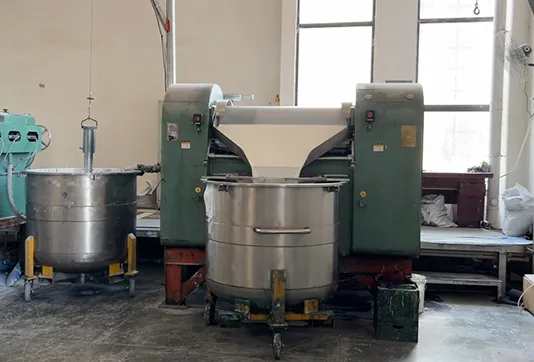
The impact of low-quality PVC resin permeates the entire product lifecycle. The most apparent issue arises during the production stage: welding difficulties. This is caused by uneven molecular weight distribution in the inferior resin, leading to fluctuating plasticizing temperatures – an issue that only surfaces during the manufacturing process.
 I once encountered an African client who, in pursuit of the lowest PVC tarpaulin price, relentlessly pressured factories to lower costs. This forced a factory, operating on thin margins, to resort to using recycled modified resin. The resulting tarpaulins were unweldable, and the factory offered no after-sales solution. This highlights why exercising caution when selecting PVC tarpaulin sheet manufacturers is crucial. Chasing the lowest price blindly can render the product unusable.
Beyond welding failure, low-quality PVC resin also causes significant problems in physical properties, durability, appearance, and safety/environmental compliance:
- Reduced tensile and tear strength: Defects in the resin’s molecular chain structure and poor compatibility with plasticizers result in insufficient base fabric strength. This makes the tarpaulin prone to tearing, puncturing under stress or high winds.
- Diminished flexibility: The material becomes stiff and brittle, increasing susceptibility to cracking or breaking during folding, pulling, or impact.
- Poor abrasion resistance: The tarpaulin surface becomes more susceptible to wear, pilling, and even abrasion-through, especially in high-friction areas.
- Color instability: Even if processed without immediate issues, the tarpaulin loses color rapidly during later use, becoming grayish, yellowish, or faded. In severe cases, a powdery residue and surface cracking appear.
IV. Assessment Methods for Excessive Calcium Carbonate
 If you’ve read this far and are also considering entering the tarpaulin industry, I’ll teach you an intuitive way to assess the quality of polyvinyl chloride tarpaulin formulations a method I’ve refined through years of experience in manufacturing. If you find this helpful, please share this article on your social media to help more users.
When you receive PVC tarpaulin canvas samples from different factories, repeatedly fold each sample by hand and observe the white crease marks.
If a white crease is very prominent, it indicates that the manufacturer has used the lowest quality PVC resin and excessive calcium carbonate, resulting in extremely low production costs. Such products are most popular in lower-end markets like India and Nigeria.
While this is one of the most primitive methods, the optimal approaches for raw material verification are:
- Request SGS reports from suppliers to validate the PVC resin’s K-value (ideally 68–70) and volatile content (≤0.3%).
- Use GPC (gel permeation chromatography) testing: An overly broad distribution (a sign of inferior quality) causes sensitivity to processing temperatures.
- Heat a small resin sample at 180°C for 10 minutes. High-quality resin turns slightly yellow and transparent; inferior resin blackens or clumps.
To meet these stringent requirements, we insist on using high molecular weight (high K-value / high viscosity) emulsion PVC resin:
- Degree of Polymerization (DP): 1000 – 1300
- Corresponding K-value: Approx. 70-80
- Viscosity Number: Approx. 110-130 ml/g
This carefully selected high molecular weight PVC resin powder forms the solid foundation for the exceptional physical properties and extended service life of quality PVC laminated tarpaulins. Low-quality resin powder, even when used with the best additives, cannot achieve the performance level of top-tier tarpaulins.