

Popular Tensile Structures for Pools and Outdoor Spaces
Tensile structures, which provide an alluring blend of aesthetic beauty, structural effectiveness, and practical performance, have emerged as a key component of contemporary outdoor architecture. Tensile structures, in contrast to conventional rigid roofing systems, use tensioned membrane materials to produce shapes that are both lightweight and extremely durable. Because of this, they are especially well suited for outdoor settings like gardens, swimming pools, resorts, and leisure areas where both practicality and beauty are crucial.
The resilience, UV resistance, and lifespan of tensile constructions have been greatly enhanced over the last decade by advancements in membrane materials including PVC, PTFE, and ETFE. Because of this, these systems are becoming more and more popular among developers and architects for both residential and commercial projects. This article will examine some of the most common uses for tensile structures, with an emphasis on pool shade systems, garden gazebo structures, conical forms, and recommended membrane materials for extended outdoor usage.
I.Swimming Pool Tensile Structures for Sun Protection
Carefully considered shade solutions are necessary for outdoor swimming pools in order to guarantee long-term use, comfort, and safety. A well-designed swimming pool tensile structure provides not only protection from intense sunlight but also enhances the overall visual appeal of the pool area.
Enhancing Comfort and User Experience
Increasing user comfort is one of the main goals of building a swimming pool tensile structure. Poolside areas can become excessively hot in many places, particularly those with intense sunlight, making it uncomfortable to walk barefoot or relax for long periods. Skin damage is one of the health risks associated with prolonged UV exposure.
Direct sunlight can be greatly reduced while still allowing natural light to pass through by using a tensile shade system. This creates a cooler and more comfortable atmosphere for swimmers and guests. Tensile membranes, unlike solid roofing systems, allow airflow, preventing heat buildup and preserving a refreshing outdoor environment.
Additionally, pool facilities are more appealing to both residential users and commercial operators like hotels and resorts because shaded areas encourage extended usage. Increased customer satisfaction and property value are frequently the results of this enhanced user experience.
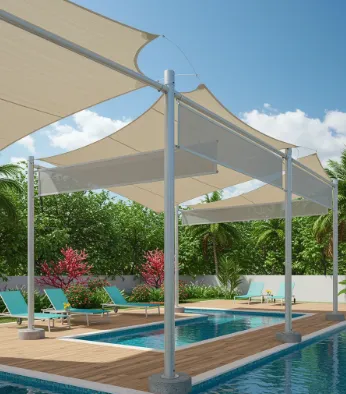
Architectural Flexibility and Visual Impact
Tensile structures for swimming pools provide unparalleled design freedom. Wave patterns, saddle shapes, cantilevered designs, and multi-peak arrangements are just a few of the forms the membrane can take. An ordinary pool becomes an architectural focal point thanks to these dynamic shapes, which evoke a sense of movement and modernity.
Aesthetics are important for branding and visitor perception in commercial enterprises. An eye-catching tensile structure can serve as a distinguishing characteristic that sets a property apart from rivals. For instance, flowing, organic designs are frequently used at upscale resorts to convey a sense of sophistication and leisure.
Additionally, the color, translucency, and size of tensile constructions may be altered. For recreational facilities, designers can use vibrant, eye-catching colors; for sophisticated settings, they can use more subtle hues. Because of its adaptbility, the structure may perfectly complement the overall design concept.
Durability and Cost Efficiency
Practically speaking, a swimming pool tensile structure is quite cost-effective and long-lasting. Strong UV radiation, heavy rainfall, and wind loads are just a few of the challenging climatic conditions that modern membrane materials are designed to withstand. This guarantees minimum deterioration and long-term performance.
Tensile constructions use less material and can be erected faster than traditional building methods, which lowers labor and construction costs. Because many membrane materials have anti-dirt and self-cleaning properties, maintenance is also relatively easy.
Tensile structures are a financially smart investment for pool shading applications because of their longer lifespan, lower installation costs, and reduced maintenance.
II.Gazebo Tensile Structure for Gardens and Resorts
Shaded outdoor areas are crucial for both comfort and functionality in landscape design and hospitality settings. A contemporary substitute for classic gazebos, the gazebo tensile structure provides a lightweight and aesthetically pleasing option for gardens, resorts, and public spaces.
Seamless Integration with Natural Environments
The gazebo tensile structure’s ability to fit in naturally with the natural environment is one of its main advantages. Tensile designs, in contrast to large timber or metal constructions, have flowing, fluid forms that blend with the natural contours of landscapes.
Because of this, they are especially appropriate for gardens, parks, and beachside resorts where maintaining the natural appearance is crucial. Many membrane materials’ semi-transparent qualities also let in soft natural light, which makes the space beneath the building feel cozy and welcoming.
Visitors may take use of sheltered spots without feeling confined, preserving a close relationship with the natural world. One of the key features of tensile architecture is this harmony between openness and shelter.
Versatility Across Applications
Because of its great adaptability, the tensile structure may be used for a variety of purposes. It may be used as an outdoor dining area or a shaded seating area in residential settings. It is frequently utilized in commercial environments for resort leisure areas, garden cafés, wedding venues, and poolside lounges.
Flexible layouts, such as single-unit installations or larger interconnected systems, are made possible by its modular design. Designers can create intimate private spaces or expansive shaded areas depending on the project requirements.
Tensile gazebos are appropriate for projects of all sizes, from modest backyard installations to large hospitality buildings, due to this versatility.
Long-Term Value and Low Maintenance
The gazebo tensile structure’s low maintenance requirements are another important advantage. Usually, the membrane materials are resistant to environmental contaminants, mold, and mildew. Protective coatings are applied to many textiles to prevent dirt buildup and reduce cleaning frequency.
Tensile membranes retain their structural integrity and aesthetic appeal for many years, unlike conventional materials that may corrode, deform, or disintegrate over time. This leads to a more dependable outdoor solution and reduced long-term maintenance costs.
This results in lower operating costs and consistent aesthetic appeal for business owners, which is crucial for preserving a high-quality client experience.
III.Why Conical Tensile Structures Are So Popular?
The conical tensile structure is one of the most popular and well-known types of tensile architecture. It is a popular option for many outdoor applications due to its ease of use, effectiveness, and aesthetic appeal.
Structural Efficiency and Strength
In terms of load distribution, the conical tensile construction is naturally efficient. Its radial shape distributes tension forces uniformly over the membrane surface, minimizing stress concentrations and improving overall stability.
The structure may cover wide areas with minimal supporting components thanks to this effective load transmission, which makes it both cost-effective and visually appealing. This design is frequently preferred by engineers due to its reliability and predictable performance in a variety of environmental conditions.
Superior Drainage and Weather Performance
The conical tensile structure’s superior drainage capacity is one of its distinguishing characteristics. Rainwater is naturally directed toward the edges of the sloping surface, avoiding water buildup and reducing the risk of structural damage.
Because of this, it is especially suitable for areas with high rainfall or variable weather patterns. Its aerodynamic design also helps in reducing wind resistance, enhancing performance in outdoor settings.
Iconic Design and Broad Applications
The conical tensile structure has a strong visual identity due to its symmetrical and attractive appearance. In architectural design, it is frequently employed as a focal point to attract attention and improve a space’s overall look.
Pool covers, parking shelters, event areas, and entrance canopies are typical applications. It is a sensible choice for large-scale or repeated installations because its uniform shape simplifies the design and construction process.
The conical design remains one of the most widely used tensile structure types in the world due to this harmony of form and function.
IV.Recommended Membrane Fabric for Outdoor Tensile Structures
Any tensile structure’s performance is mostly determined by the kind and quality of membrane material utilized. Whether it’s a conical tensile structure, a gazebo tensile framework, or a swimming pool tensile structure, choosing the appropriate fabric is crucial to attaining longevity, safety, and aesthetic appeal.
Overview of Common Membrane Materials
The most popular material is PVC-coated polyester cloth because of its balanced performance and low cost. It is appropriate for a range of outdoor applications due to its high tensile strength, waterproofing, and UV resistance.
PVDF coatings are frequently applied to PVC membranes to improve performance. This extra layer offers self-cleaning properties and increases resistance to dirt and environmental contaminants. Because of this, the building requires lower maintenance over time and stays cleaner.
Key Considerations for Material Selection
Climate conditions, project budget, target lifespan, and aesthetic criteria are all important considerations when choosing a membrane material.
Materials with strong UV resistance should be prioritized in areas that receive a lot of sunshine. PVC with PVDF coating offers an affordable option without sacrificing performance for clients with tight budgets. On the other hand, PTFE membranes‘ enhanced lifespan and appearance can be beneficial for high-end projects.
The swimming pool tensile structure, gazebo tensile structure, and conical tensile structure will ultimately function reliably and retain their aesthetic appeal over time if the appropriate material is selected.
V.Conclusion
The design and use of outdoor spaces have been revolutionized by tensile constructions. They are the perfect choice for a variety of applications because of their capacity to blend lightweight design with excellent performance and eye-catching looks.
These systems provide unmatched adaptability, from the practical advantages of a swimming pool tensile structure to the beauty of a gazebo tensile structure and the efficiency of a conical tensile structure.
Tensile structures will become more crucial in shaping contemporary outdoor spaces as material technology advances, offering long-lasting, aesthetically pleasing, and sustainable solutions for years to come.
Share Thisw Story:
Table of Contents

Lynn Chen
I’m Lynn from Haining Lona Coated Material Co. For years, I’ve been helping customers find the right PVC coated fabric and related products for their projects. Whether it’s for inflatables, tents, or industrial covers, I’m here to share ideas, answer questions, and make sure you get the right solution. Feel free to reach out — I’m always happy to talk.
Try LonaTarp® Customize Your Tarpaulin Now
- PVC Formulation Properties
- Strength, Weight and Thickness
- Glossy, Matte, Color, Print and 3D Embossed Patterns
- Tarpaulin Roll Sizes and Packaging
- Cutting, Heat Sealing, Sewing, Add Eyelets, and Accessories Purchasing
